Tag: postpartum

  • The Magic of Postpartum Support

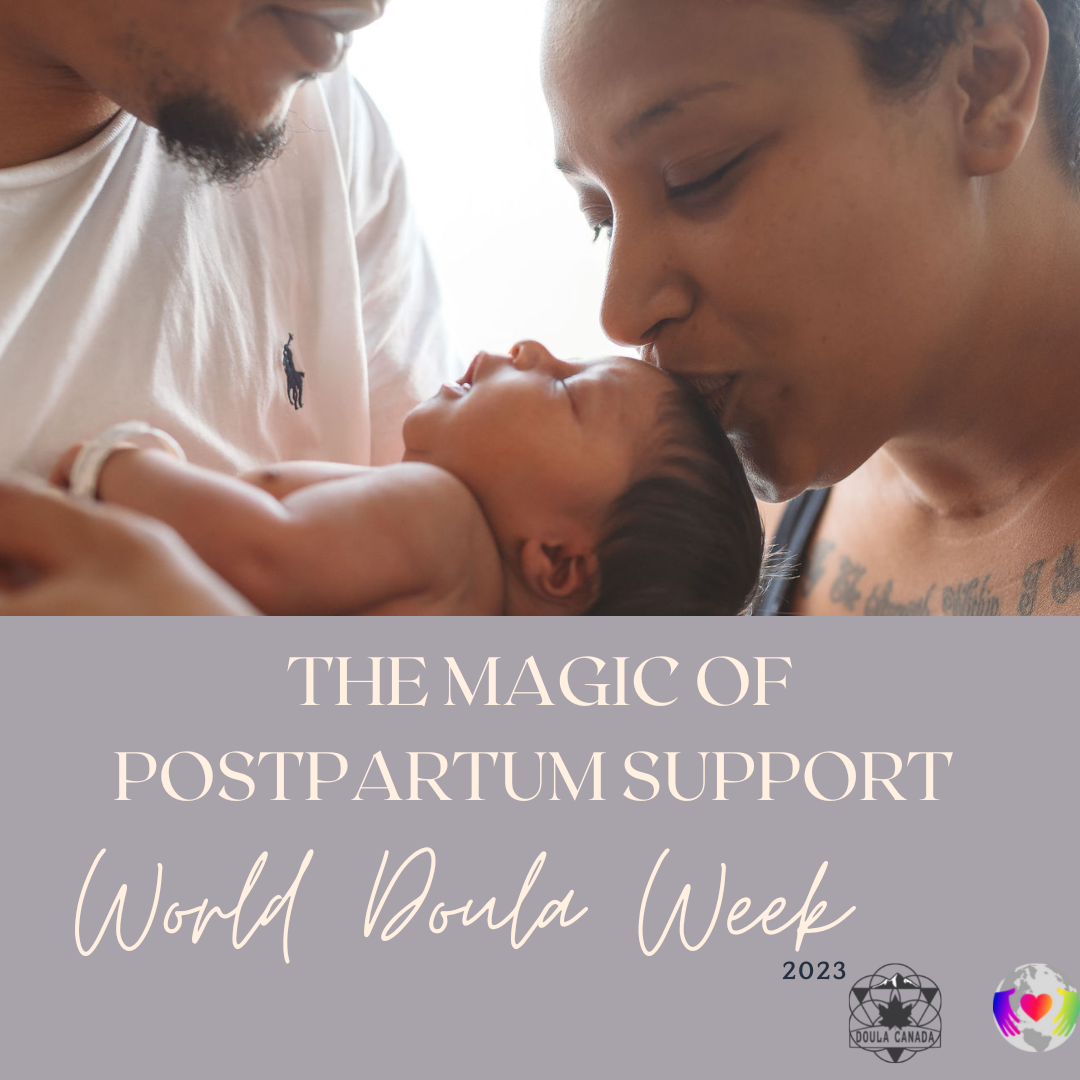
    The Magic of Postpartum Support

    [vc_row][vc_column][mk_padding_divider][/vc_column][/vc_row][vc_row][vc_column][vc_column_text css=”.vc_custom_1679838820005{margin-bottom: 0px !important;}”]You’ve given birth and become a parent but it can feel like there is no time for recovery. The focus shifts almost entirely to your baby and your own needs can get sidelined. It’s exciting but also overwhelming and exhausting, both physically and emotionally. And just when new parents are at their most vulnerable, their babies take centre stage.

    There are a lot of things about the postpartum period that you can’t control: how feeding will go, how your baby sleeps, your hormone fluctuations, etc. But you CAN prepare a great support system and a postpartum doula is an important part of that. Having access to a postpartum doula relieves a lot of stress so you can focus on the important business of bonding with your baby. If you haven’t worked with a doula before, it can be pretty hard to grasp what it is exactly that doulas do. And while birth doulas have been gaining in popularity, postpartum doulas are still a mystery to most expecting parents.

    So what magic does a postpartum doula offer?

    A postpartum doula helps you build community. The saying, “It takes a village” is true, a postpartum doula will help you rally family, friends and neighbours to feed you and your family nutritious food, supply solicited (and unsolicited) advice, and take care of older siblings. If support is in short supply they will work with you to find the places in the community that you can lean into to build your new postpartum community.

    A postpartum doula helps build your confidence. Whether it be in feeding, or newborn care, when you have someone there to affirm that your choices are actually right on track, you start to believe in and trust yourself and your observations about your baby.

    A postpartum doula supports your whole family. Partners who have doulas learn skills earlier and are more able to take on care of their infant alone earlier. Grandparents who have doulas around learn to care for new parents in a gentle and supportive way, able to use their instincts and experience in a way that supports their choice. Siblings gain another supportive adult to tend to their needs and help them bond with the baby and have time with their parents one on one.

    A postpartum doula is well-versed in normal newborn behaviour and appearance, and normal postpartum healing. They can’t diagnose medical issues or mental health issues, but they can point out things that don’t seem normal to them so that parents can get an opinion from the appropriate professional.

    A postpartum doula can help parents interpret those newborn cries—and the reflexes, body language, and other sounds that accompany newborn life! This is hugely empowering to parents who desperately want to know what is going on in that new little person.

    A postpartum doula knows the importance of postpartum planning and will help you sort through what you need, the support you have and will need to have and how to navigate those early weeks and months with the new baby. ( check out our postpartum planning guide below)

    A postpartum doula can work with you during the day or overnight. Some postpartum doulas offer one or the other and others offer a mix of both.

    A postpartum doula is trained to recognize the difference between the typical “baby blues” and something more serious, like postpartum depression or anxiety. They can observe the new parent’s behaviour and determine if there may be a cause for concern, and as an impartial, objective third party they can provide a sounding board for her when they are ready to share their feelings.

    A postpartum doula understands the need for the family’s care to be well-rounded; it is important that both their physical AND emotional needs are met. This vigilance truly is the first line of defence against postpartum mental health issues.

    The postpartum period is a time of great transition, a time when people become parents, where they get to know themselves and their baby in this beautiful and challenging time. A primary goal of a doula is to meet a pregnant or postpartum person where they’re at. To find what is most important and most needed for you and your family.

    Want your postpartum period to be calmer, do you want to feel more confident, bond more deeply with your baby? Hire a postpartum doula today![/vc_column_text][/vc_column][/vc_row][vc_row][vc_column][mk_padding_divider][/vc_column][/vc_row][vc_row][vc_column][vc_column_text css=”.vc_custom_1679838899311{margin-bottom: 0px !important;}”]Our postpartum wellness plan is all about creating the space for you and your family to discuss and plan for the transition that is parenthood. To gather your commulity and bond with your baby.[/vc_column_text][/vc_column][/vc_row][vc_row][vc_column][vc_btn title=”Download the Postpartum Wellness Plan here ” color=”turquoise” link=”url:https%3A%2F%2Fstefanie-techops.wisdmlabs.net%2Fwp-content%2Fuploads%2F2023%2F03%2Fpostpartum-care-plan.pdf|target:_blank”][/vc_column][/vc_row]


  • Advocacy at Doula Canada

    Advocacy at Doula Canada

    [vc_row][vc_column][vc_column_text css=”.vc_custom_1669384798061{margin-bottom: 0px !important;}”]Doulas support birthers, babies, and family members during an intimate and emotionally charged experience that often involves many medical twists and turns along the way. For many doula clients, pregnancy and childbirth are among the most complicated experiences with our healthcare system they will have ever had to navigate. We know that birthers need to feel in control of what happens to their bodies and to be making informed choices about their care to create a positive experience and avoid trauma. 

    Doulas can change a person’s healthcare experience for the better by supporting their bodily autonomy and informed decision-making. Additionally, we are well placed to notice systemic issues that impact our clients again and again, and to use our knowledge to encourage and support changes.

    Learning to engage in this type of advocacy within the scope of the doula’s role, so that our efforts are helpful, is an important aspect of our learning and professional development. To support our students and alumni, Doula Canada has developed an advocacy framework that defines advocacy in the context of doula practice and describes approaches to individual advocacy that are aligned with respect for client autonomy. 

    Our framework identifies three categories of advocacy that doulas engage in: systemic advocacy, self-advocacy promotion, and individual advocacy. 

    Systemic advocacy is any effort to change, remove, or add a policy or process that affects the lives of birthers, families, babies, or doulas. Examples include lobbying your elected federal representative to change the birth evacuation policy or amplifying social media campaigns that raise awareness regarding perinatal mental illness.

    While we don’t usually think of it as such, our work with clients to support them to know the evidence regarding their perinatal circumstances, and ask the right questions of their healthcare providers is a form of advocacy. We encourage them to use their voice and make their conversations more effective because they are armed with information.

    Sometimes, especially in the birth room, it might be necessary to advocate for the client in more direct ways. It is important that this individual advocacy does not manifest as speaking for or over the client, or in a manner that could worsen their care or medical situation.

    A 2020 paper by S.S. Yam based on interviews with doulas identified three types of tactics that doulas use to advocate for their clients during labour and delivery. She calls these “soft-advocacy” techniques because they differ from what we usually think of as advocacy. Staff and instructors at Doula Canada agreed they used these strategies and had lots of guidance to offer on exactly how to use them. Their guidance was used to develop the advocacy framework. 

    The three tactics identified by Yam are 1) creating deliberative space, 2) cultural and knowledge brokering, and 3) physical touch and spatial maneuvers. 

    Creating deliberative space refers to strategies that give the client more time to ask questions and make decisions. One example of how doulas do this is by noticing that care that deviates from their preferences is about to happen and bringing it to the client’s attention, prompting them to ask about the intervention that is about to happen.

    Cultural and knowledge brokering refer to the tactics doulas use to make sure the client understands medical jargon or cultural norms. This could involve paying close attention to the information provided by the medical team, observing how well this is understood by the client, and repeating the information in language that the client uses and understands.

    Physical touch and spatial maneuvering refers to the ways we use our bodies and physical contact with the client to advocate for their needs. Examples include using our bodies to conceal the client from view, modeling consent by asking permission each time we touch the client, and using our presence to back up the client during interactions. 

    The complete framework is linked below. It offers more detail on the three types of advocacy and the soft-advocacy strategies. It illustrates these concepts using case studies based on staff and instructor experiences. 

    In 2023, Doula Canada will continue its work to support advocacy among its members by developing an advocacy toolkit from the framework and launching an advocacy working group for students and alumni. [/vc_column_text][/vc_column][/vc_row][vc_row][vc_column][mk_button corner_style=”rounded” size=”large” url=”https://stefanie-techops.wisdmlabs.net/wp-content/uploads/2022/11/advocacy-framework-paper.pdf” align=”center”]Click here to view the full Advocacy Framework document[/mk_button][/vc_column][/vc_row]

  • 10 Tips for Winter Doula Life in Canada

    10 Tips for Winter Doula Life in Canada

    [vc_row][vc_column][/vc_column][/vc_row][vc_row][vc_column][vc_column_text css=”.vc_custom_1572904294631{margin-bottom: 0px !important;}”]

    Winter is fast approaching, and for some of us we couldn’t be happier. However, if you’re like me, it’s a less than exciting time. Here in Newfoundland, winter lasts about half the year, so we need to put in some extra effort to try to enjoy this tidbit nipply season. As a Canadian doula, we have the extra challenge of navigating birth work through this unpredictable time of year. Here are my suggestions to help you get through these cold months:

    [/vc_column_text][mk_padding_divider][/vc_column][/vc_row][vc_row][vc_column][vc_column_text css=”.vc_custom_1572904448393{margin-bottom: 0px !important;}”]Number 1:
    Have good winter tires – we can be called to a birth or scheduled for a postpartum shift anytime, so it’s important to be confident on the road. If you’re able to reschedule your shifts if the weather is bad, all the better, but even on a nice day you might be facing some less than optimal road conditions. Personally, I hate spending money on my car, but good tires are an investment in my safety and the safety of everyone else on the road too, and a bit of piece of mind.

    Number 2:
    Make sure your childcare will still stand if there’s a snow day at school or if the road conditions are really bad – will your sitter or family still be able to get to you or take your child if there is no school? Make sure you have backup for your back up if circumstances change.

    Number 3:
    Have an emergency pack ready in your car – are you prepared if you get stuck somewhere and can’t get home? Have some extra toiletries and clothes packed incase you need to stay with friends or sleep in the waiting room of the hospital before you get home. I know at the end of a long birth or shift it can be very tempting to just push through and try to get home, but sometimes its better to stay where you are until the roads clear up. Have things packed so you’re ready if you need to wait to get home.

    Number 4:
    Get outside as much as possible – it can be very tempting to ignore the existence of snow and slush and cold. But for our mental health, it important for us to get for fresh air and some vitamin D. You can try snowshoeing or skiing. Or maybe it just a matter of standing outside your door for a couple seconds in the mornings to start your day.

    Number 5:
    Pack layers in your go bag – the temperature of a hospital room or someone else’s house in unpredictable at the best of times, but especially during the winter. Pack lots of layers so that you can stay comfortable and your clients don’t need to accommodate you.

    Number 6:
    Give yourself lots of time for travel – maybe you need to adjust your contract to allow for extra travel time during the winter months. If you live close to the hospital, or if your catchment area for your clients is pretty small, it might not make a difference to your travel time, but make sure you either leave earlier than you usually would or make sure clients know you might take a bit longer, weather depending.

    Number 7:
    Have some soul warming self care practices – birth work is hard work, both physically and mentally, and self care may look different during the winter months. Make sure you have some ways to fill your cup and keep your heart warm. Maybe you like having a hot bath, or enjoying a cup of tea or really good coffee or stretching your body and mind with a regular yoga practice. Take care or yourself so you can better take care of your clients and your family.

    Number 8:
    Stay active – We need to take care of our bodies so that we don’t risk injury when we are working with families, be it at a birth or during postpartum shifts. It’s easy to increase how much time we spend sitting when its not so nice out, so make sure you’re doing things to keep your body moving. Yoga, swimming, snowshoeing, skiing, walking on an indoor track, stacking wood are all great ways to keep your body active when its tempting to just stay inside and cozy under a blanket for the next 6 months.

    Number 9:
    Eat as healthy as possible – fresh fruit and veggies are hard to come by in the middle of winter. To care for our bodies, we must also be conscious of our nutrition. I’m guilty of becoming lazy when it comes to cooking healthy meals. Frozen fruit and veggies are a great way to keep the good food coming without spending a fortune to buy out of season produce. Maybe make some granola bars or trail mix to bring with you to births and shifts so that you’re not tempted to buy junk to keep your body full of fuel.

    Number 10:
    Learn to embrace it a little – it took me a long time, but eventually I came to the realization that I don’t want to be miserable for half of my life, so I figured out how to, not love, but embrace winter a little bit more. Whether it’s at home, at work or in your social life, do something that helps you to enjoy this colder season.[/vc_column_text][mk_padding_divider][/vc_column][/vc_row][vc_row][vc_column][vc_column_text css=”.vc_custom_1572904478048{margin-bottom: 0px !important;}”]

    We live in a very large and diverse country, even when it comes to the weather. No matter where you find yourselves this winter, I’m sending lots of love and wishes of warmth for you all. Stay safe out there Doula Canada!

    [/vc_column_text][mk_padding_divider][/vc_column][/vc_row][vc_row][vc_column width=”1/2″][vc_single_image image=”1855″ img_size=”medium”][/vc_column][vc_column width=”1/2″][vc_column_text css=”.vc_custom_1572904706244{margin-bottom: 0px !important;}”]About the author:

    Samantha Whitman is a certified Labour and Birth Doula with Doula Training Canada, and the current Provincial Liaison for the province of Newfoundland and territory of Labrador.

    Samantha has a history of being dedicated to supporting the families of her community, previously as a paramedic and now as a doula.

    She lives in the central area of Newfoundland with her husband and son and enjoys getting outside, hiking, and exploring with her family.[/vc_column_text][/vc_column][/vc_row]

  • A Postpartum What?


    Do you know how wonderful labour doulas feel after a birth?  Knowing they worked hard and their client did IT.

    Do you know that same feeling can come from “Mothering the Mother”?  A beautiful gift of being a Postpartum Doula.  And our world *needs* this help!!  Most of us don’t have round the clock support.  Many times our own parents are not in the same community and our partners return to work after just a few weeks (or less!).  And being a new mom is hard.  We can all use a little support.

    Here is a piece from a then student’s postpartum doula report that brought a little tear to my eye because I could feel the joy of that little boy, and the relief of the new mom that she could give that to her boy.  (The student doesn’t know I’m using it so I hope she forgives me lol!  Names have been avoided for confidentiality purposes).

    “As a special surprise, she asked if I could stay in with the boys and M. while she met T. at the bus stop which she can’t usually do so she has a walker.  It made T.’s day!!!”

    Such a small thing, but made a world of difference to this postpartum family.  And that’s what a postpartum doula does!  A lot of little things that add up to a HUGE difference in the world of new (or growing) families.

    Do you think this is something you want to do?  Does this call to your heart?  Contact us today!  doulatrainingcanada@gmail.com 

    www.stefanie-techops.wisdmlabs.net