Tag: equity

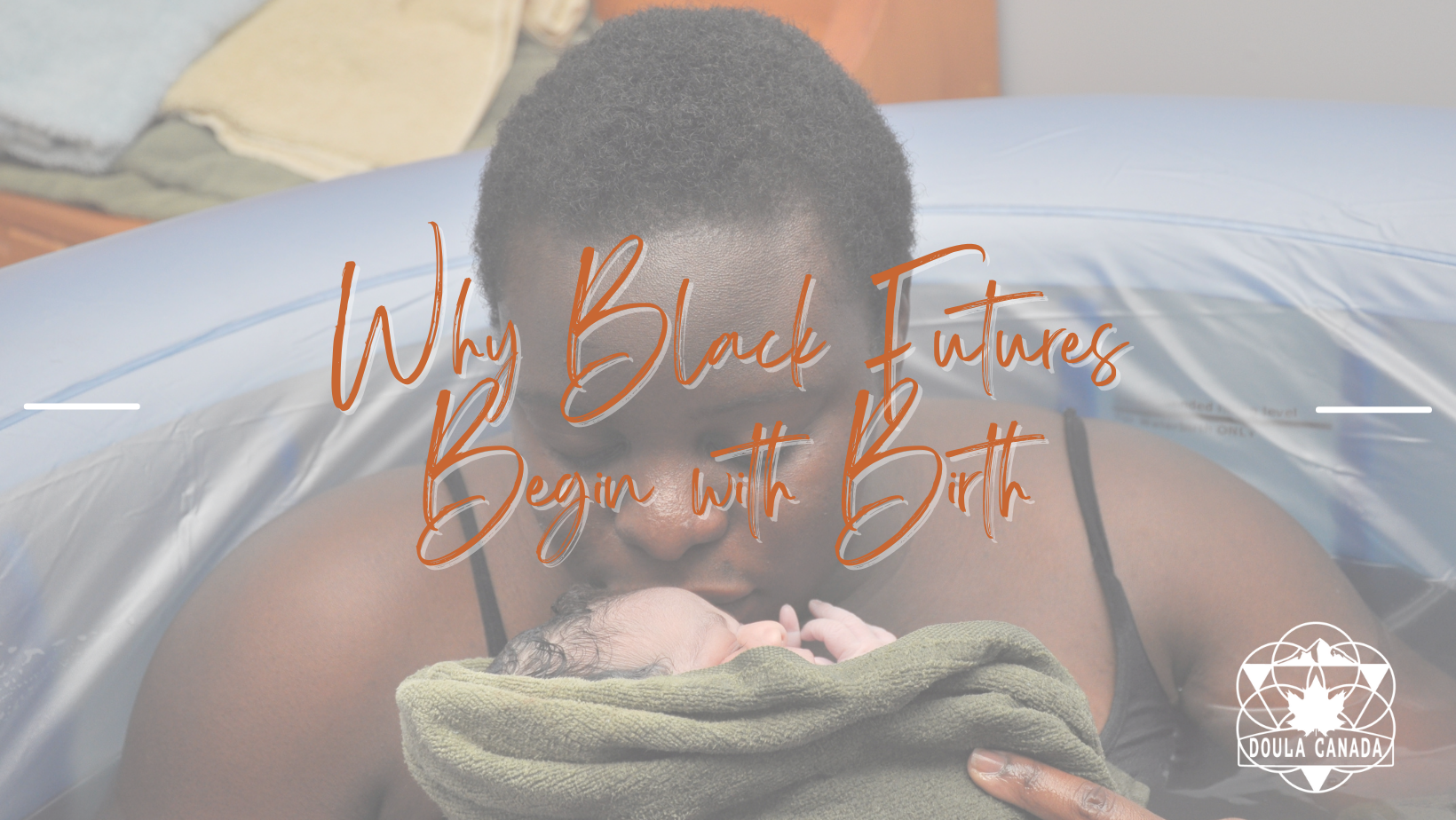
  • Why Black Futures Begin with Birth

    Why Black Futures Begin with Birth

    [vc_row][vc_column][vc_column_text css=”.vc_custom_1676056467901{margin-bottom: 0px !important;}”]

    Why Black Futures Begin with Birth

    Written by Keira Grant  – DTC EDI Lead for Racialized Communities

    February is widely known as Black History Month. This term has rubbed me the wrong way since I was a kid, but it took me a while to put my finger on why. The reference to “history” is full of loaded assumptions that are highly convenient to colorblind multiculturalism. It suggests that racism toward Black people is something that happened a long time ago, maybe in a faraway place. Then slavery ended and then there was Black excellence.

    Of course, there have always been excellent Black people, but that’s not really how the story goes. The beliefs that made slavery possible for centuries are part of the fabric of society. Even when we are excellent by eurocentric, capitalistic standards, it could still go the way it went for Tyre Nichols.

    The violence that brutally ended the life of Tyre and so many others like him flows through all social institutions, not just policing. In countries such as the United States and the United Kingdom where race-based health data is collected, these data show that Black birthers are anywhere from 3 to 4 times more likely to die in childbirth than their white counterparts. Our babies are also at a significantly increased risk of death. This holds true, independent of education and socioeconomic status. The birth stories of celebrities like Beyoncé Knowles, Serena Williams, and Tatiana Ali, (whose story we’ll be discussing at March’s Equity Watch Party), bring these statistics to life.

    At this time, many players in the Canadian healthcare system are calling for the collection of disaggregated race-based data. In the US, the collection of these data, and the resultant evidence of disparities has led to increased funding for programs that improve Black maternal health, including a proliferation of programs for accessing a Black doula. It has also supported requirements that health professionals receive training in implicit bias.

    It’s been widely reported in the news that Tyre Nichols called out for his mom during the brutal attack that ended his life. Every Black person who dies as a result of structural violence is someone’s baby. When systemic disrespect and harm toward Black birthers and babies is normalized, rationalized, and justified it is the start of a pattern that impacts Black people across the lifespan. Emerging research is actually demonstrating that racial stress accelerates the aging process of Black women.

    Creating a circle of love and support around Black birthers and their babies that is honest about what we are up against, and that celebrates our lives and well-being can have a profound impact on how someone’s life starts. It can affect how their life continues by showing them and their families that it is possible to create spaces where Black people are affirmed and nourished.

    We talk about equity, diversity, and inclusion in this work all the time. During February, we have additional opportunities for our members to learn and engage in dialog about anti-Black racism and racial health equity in perinatal care. We are using the language Black Futures Month, “a visionary, forward-looking spin on celebrations of Blackness in February”.

    [/vc_column_text][/vc_column][/vc_row]
  • Recognizing Asian Heritage Month and Jewish Heritage Month

    Recognizing Asian Heritage Month and Jewish Heritage Month

    [vc_row][vc_column][vc_column_text css=”.vc_custom_1653215730289{margin-bottom: 0px !important;}”]May is Asian Heritage Month and Jewish Heritage Month. It’s a great opportunity to reflect on what we mean by “heritage” regarding the history of these two communities in “multicultural” Canada, and what this means for creating cultural safety in birth work.

    I’ve lived in the GTA my whole life. Here, a “heritage festival” typically amounts to a street party with food, live music and dance, and other culture-specific entertainment. I am actually a great lover of a good street fair. The food and performances are usually lit. I have also learned a lot about Jewish and Asian history and culture at events like the Ashkenaz Music Festival and Taste of Asia. I also understand that many communities are not fortunate enough to have this level of exposure to culture and diversity. But these cultural displays are not only far from telling the whole story of the “heritage” of Asian and Jewish people in Canada, but they also contribute to “false peace” – the illusion that multiculturalism is working out, that we are all getting along, and that we are all equal.

    In truth, there is anti-Asian racism and anti-Semitism at the core of Canada’s heritage. Those of us who remember “Heritage Minutes” from the 1980s and 90s may know about the lethal exploitation of Chinese migrant workers that occurred in the 19th century to support the construction of the trans-Canada railroad. There are many other examples, including the head tax, and internment camps during WWII

    Anti-Semitism is equally a part of the fabric of Canada’s history. Wide-spread belief in a Jewish conspiracy to achieve global economic domination that originated in Europe and spread to North America made Jewish Canadians an easy scapegoat during the great depression. Additionally, to limit the economic advancement of Jewish immigrants in the early 20th century, Canadian universities implemented quotas that restricted the number of Jewish applicants who could be admitted to the school.

    It’s easy to hear these stories and think “this has nothing to do with me”, “this is ancient history”, “I didn’t do these things”, and “let’s focus on the positive and how far we’ve come”. While these sentiments are understandable, the reality is that the present arises from the past. These uglier parts of our heritage are directly related to more recent attacks on synagogues and the hate crimes experienced by Asian Canadians during the pandemic. 

    Moreover, this heritage underpins the modern assumptions that manifest more subtly as microaggressions that affect the day-to-day navigation of society and impact the long-term mental and physical health of equity-seeking people. Some of these stereotypes may seem harmless or even positive. But in reality, they fuel the construction of whiteness as the social norm, put people in boxes, and create false impressions regarding people’s realities.

    As birth workers, we can create cultural safety regarding the beautiful and the traumatic aspects of each client’s heritage. We can create space for them to share whether they have any cultural or religious traditions that they would like to honour. And we can also be mindful of things like how common stereotypes about Asian women may influence provider perceptions of client autonomy. Or how the intergenerational trauma of Holocaust survivors may impact pain management. There are a number of ways that our identities can impact our pregnancy and parenting journey. Shining a light on the good, the bad, and the ugly of our heritage sets us up to ask the right questions and facilitate the needed conversations with all of our clients.[/vc_column_text][/vc_column][/vc_row]

  • Applying an Equity, Diversity, and Inclusion Lens to our Curricula

    Applying an Equity, Diversity, and Inclusion Lens to our Curricula

    [vc_row][vc_column][vc_column_text css=”.vc_custom_1626172064269{margin-bottom: 0px !important;}”]In Fall 2020, Doula Canada circulated a survey that was looking to hear specifically from members self-identified as belonging to equity-seeking groups such as, but not limited to, Indigenous, Black, racialized, immigrants or newcomers, LGBTQ2S+, and/or disabled peoples. We really wanted to hear directly from members about their experiences, learn from them, and listen for ways that they felt that we could do better. Something that came up repeatedly was the gaps in our curriculum materials that resulted in members feeling excluded – things like gendered language, white dominant images, only heteronormative references, limited or inappropriate cultural references, and more. We were feeling this too and it was powerful to hear it echoed back at us!

    We certainly see that, historically, the primary narrative in education and training in the perinatal field (especially in Canada) centers and reflects persons and experiences characterized in the following ways: white (including white/light skin tones and hair that tends towards long, blonde/brown and straight/wavy), in a heterosexual and racially homogenous couple, able-bodied, thin, 30-something, with pregnancy intentional and resulting from sexual intercourse between a cisgender woman and man. This narrative has been applied to both doula clients and doulas themselves. It is seen in images, language, resources and references, and focus of discussions. This narrative leaves so many valued people and groups OUT.

    In late 2020, we took deeper action to change this narrative in our own house by initiating the development of a robust Curriculum Checklist that is built around an intentional integration of an equity, diversity, and inclusion (EDI) lens in curriculum materials (oral and written). Yes, a checklist sounds like it could be ugh when it comes to EDI work  – like a token action that gets people off the hook from doing any deeper, transformational work. We thought about that! Our Curriculum Checklist is for internal and external course developers and instructors who work with Doula Canada. It pushes them to reflect on how people who differ from the primary narrative are excluded and ignored, or, are mentioned and described in ways that present them as out of the ordinary. The Checklist means that dominant biases get reduced or removed from our curriculum through an intentional and guided change in language, images, references, and resources. The Checklist is also part of our Equity, Diversity and Inclusion (EDI) Action Plan (that we will officially launch soon). 

    We have just started to test out the Checklist in practice. We will watch the results and take action as required. We see it as a living document that will be continuously refined and improved. Right now, it largely focuses on sexual orientation, gender identity, race, and culture as areas where the dominant narrative is exclusionary. We have started adding more on intentional inclusion of Indigenous Peoples and disabled people.

    Wondering what it looks like? Here are a few snippets![/vc_column_text][/vc_column][/vc_row][vc_row][vc_column][vc_single_image image=”377355″ img_size=”full”][/vc_column][/vc_row]

  • Using Inclusive Language in Birth Work

    Using Inclusive Language in Birth Work

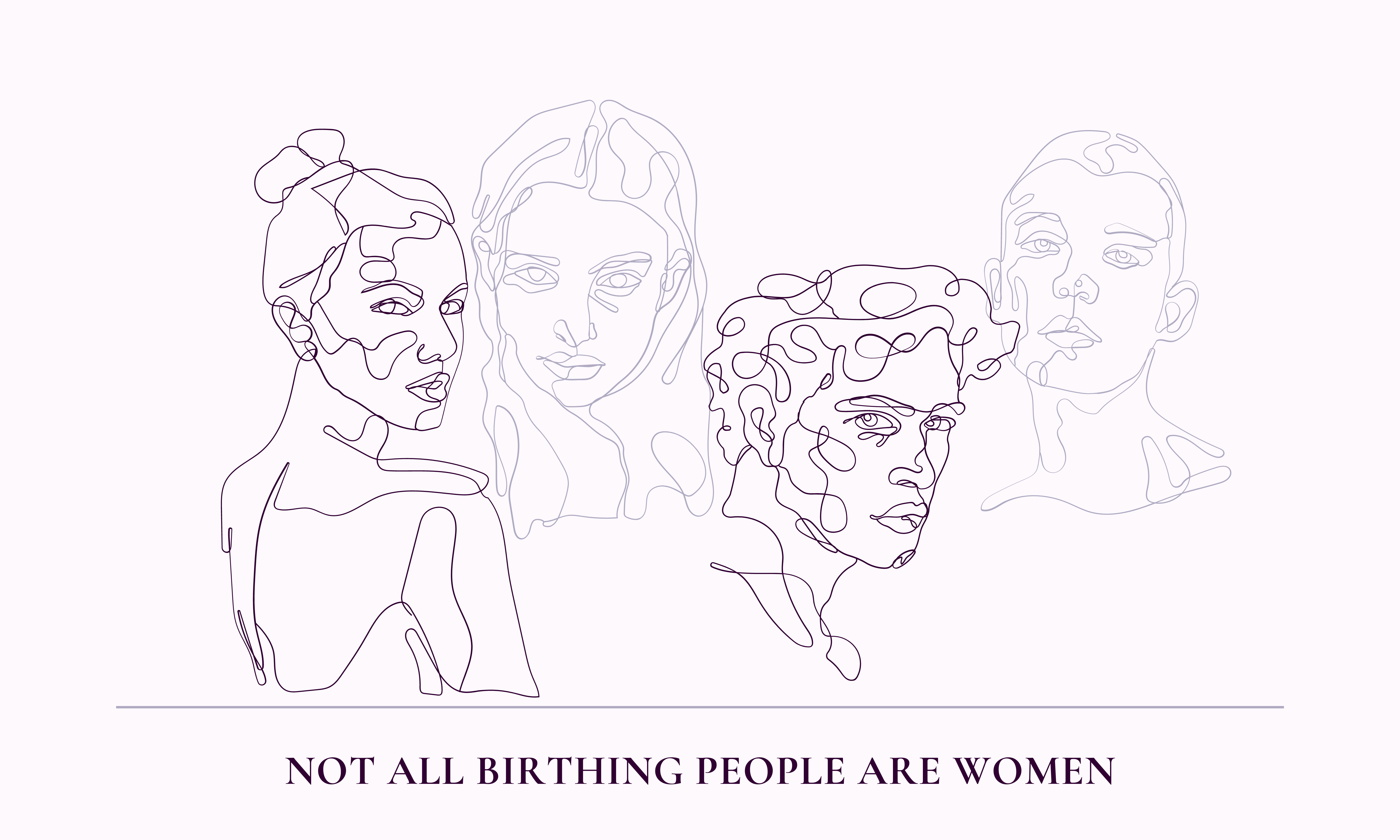
    [vc_row][vc_column][vc_column_text css=”.vc_custom_1617899935998{margin-bottom: 0px !important;}”]Let’s start with this: not all birthing people are women.

    The birth world is full of ideas about who can get pregnant, give birth, and parent.  This is reflected in the images we see on social media (hello, white dresses and flower crowns), the materials available to us (the classic La Leche League text, “The Womanly Art of Breastfeeding”), and the language that automatically gets applied to pregnant people (“Hi mamas!”)

    If you’re somebody whose understanding or experience of parenthood fits into these ideas, you might not have even noticed that they exist. If you’re somebody whose understanding or experience of parenthood exists outside of these ideas, you’re probably painfully aware that they are there.

    If your own personal connection to pregnancy and birth is rooted in being a woman, that’s okay. If your passion for birthwork, your reason for becoming a doula, and your personal brand are all rooted in working with women, that’s okay too.  What isn’t okay is forcing these ideas on to people who don’t fit into them.

    As doulas, our work is meant to be client-centered.  This means listening to our clients’ needs and doing what we can to meet them. As well as being about which resources you share and which comfort measures you offer, being client-centered is about how you recognize your clients and the language that you use. If you are working with a client whose experience of pregnancy, birth, and parenthood don’t align with your understanding of these things, then it is your job to shift your framework to include them.

    Some suggestions:

    1. When introducing yourself to a client, share your pronouns as well as your name: “Hi, my name is Anna and I use she/her pronouns.” This creates space for your clients to share their pronouns too.
    2. Think about the language and images you use in your own materials and brand.  Who does it include?  Who does it exclude?
    3. Share the terms that you use, but acknowledge that clients’ may use different ones.  “I generally use the term breastfeeding, but let me know if you would prefer chestfeeding, nursing, or something else.”
    4. Recognize that we are always learning and growing and sometimes that means we will make mistakes.  If you are challenged on something that you’ve said or done, say thank you and move on: “Thank you– parent, not mom.  I’ll try to not make that mistake again.”
    5. When possible, challenge other service providers’ language and assumptions too.
    6. Find opportunities to celebrate a range of identities, experiences, and families.  You can do this through your conversations with colleagues and clients, your social media, and events like Pride.

    [/vc_column_text][/vc_column][/vc_row][vc_row][vc_column][mk_image src=”https://stefanie-techops.wisdmlabs.net/wp-content/uploads/2021/04/instead-of.png” image_size=”full”][/vc_column][/vc_row][vc_row][vc_column][vc_column_text css=”.vc_custom_1617915869980{margin-bottom: 0px !important;}”]Building an inclusive doula practice means being intentional about the way you understand and reflect who can get pregnant, give birth, and be a parent. Unlearning and expanding these ideas can be challenging, but also rewarding.  Doing this work means that you’ll be ready to work with all clients, not just all mothers.

    What are you doing to make your work inclusive?  Let us know in the comments![/vc_column_text][/vc_column][/vc_row]