Tag: birth

  • Embracing Mothering, Releasing Motherhood: Women’s History Month

    Embracing Mothering, Releasing Motherhood: Women’s History Month

    [vc_row][vc_column][vc_column_text css=”.vc_custom_1711640523303{margin-bottom: 0px !important;}”]I loved one-sided “conversations” with my son when he was an infant and it’s one of my favorite things about postpartum visits now. I refer to all my clients by their first names, however, when I’m providing postpartum support to clients I know identify with terms like “woman”, “mother”, and “mom”, I often find myself talking to Baby about how wonderful their mama is and what a great job she’s doing, especially when they get to the stage where their eyes follow her around the room lovingly. 

    This often sparks a conversation with the client, especially if no one else is there. That’s part of my goal. In a patriarchal world, “mother” is a loaded construct. Adjusting to the idea that you are now someone’s “mama” is one of the most emotionally and psychologically intense aspects of the postpartum experience for first and only-timers because of everything that is expected of motherhood. 

    Canadian feminist scholar Dr. Andrea O’Reilly has devoted her academic career to understanding what it means to be a mother. A mother of three herself, she understands “motherhood” as something separate from “mothering”. Motherhood is a patriarchal institution that sets rigid, specific, and unattainable expectations on the care work of raising children as a means of exerting control over women’s bodies and lives. To meet patriarchal expectations of motherhood women must be selfless, long-suffering, patient and kind, and compliant with expectations of good, wholesome women. Patriarchy’s archetypal mother does not sexualize herself, but she also doesn’t “let herself go”. She keeps an immaculate home and serves balanced, from scratch meals. She has well-groomed, well-behaved children. She always knows exactly what to say and do to comfort her family and keep peace and order in the home. By the 1980s, contributing to the household income was added to the list of expectations. As an avid fan of The Cosby Show, it did not strike me as unusual that high-powered lawyer and mom of 5 Clare Huxtable would make fresh squeezed OJ and pancakes from scratch for her brood on Saturday mornings, served in the comfort of their stunning, self-cleaning Park Avenue home.

    As a working mom of one in 2024, it strikes me as absurdly implausible, and that’s intentional. The point is not for anyone to be as perfect as an 80s sitcom mom. The point is for all of us to feel like we’re failing by comparison.

    Conversely, O’Reilly defines “mothering” as autonomous, empowered, and priceless social labour that we construct and define according to our deep knowledge of family, community, and personal needs. As a verb rather than a noun, “mothering” is action-oriented and the role is created by those who enact it. Mothering does not require the relinquishment of self but affirms each mother’s right to undertake the role in a manner that is faithful to her authentic self. 

    When supporting new mothers I hold space for their joy and discomfort with being called “mama”. I normalize using alternative monikers if that’s preferable. My wife was not comfortable with “mother” as a label, so we went with a variation of her nickname instead. I encourage them to insist on making space for the things that made them “them” before they had their beloved baby. We unpack unrealistic and sexist expectations of moms as they arise. I affirm the need to putting yourself first sometimes, for the overall good of the family. We lay the groundwork for them to define the role according to what works for them and their family. Liberating new mothers from the constraints of motherhood and facilitating their intuitive enactment of mothering is one of my favourite aspects of being a doula. 


    We hope our woman-identified audience is having an affirming Women’s History Month this March. For those of you who mother, we affirm your right to do this living giving, nurturing work on your terms. [/vc_column_text][/vc_column][/vc_row][vc_row][vc_column][vc_single_image image=”534490″][vc_column_text css=”.vc_custom_1711640593876{margin-bottom: 0px !important;}”]Keira Grant (she/her) Inclusion and Engagement Lead – Racialized Communities

    Keira brings a wealth of experience to the Online Community Moderator role. She is a Queer, Black woman with a twenty-year track record in Equity, Diversity, and Inclusion (EDI) education, projects, and community building initiatives.[/vc_column_text][/vc_column][/vc_row]


  • EDI Year in Review 2023

    EDI Year in Review 2023

    [vc_row][vc_column][vc_column_text css=”.vc_custom_1709738042033{margin-bottom: 0px !important;}”]A river may be so still that you can see your reflection, but its current is always in motion. This year has been a time of great change for Doula Canada as we have welcomed renewal in the form of new leadership. We have taken advantage of this transition to reflect on revitalizing our commitment to equity, diversity, and inclusion at DC and in the birth sphere. Our goal is to ensure that Doula Canada alumni have the necessary tools and frameworks to meet the diverse spectrum of birthing people, families, and communities with compassion, affirmation, and allyship. In the coming year, we will continue to apply the lessons learned from all of your insights to realize policy, curricula, and continuing education that sets doulas, reproductive health educators, and birthworkers up for long-term success in an ever-changing world. 

    Here are some of the highlights of our actions in 2023 and our plans to advance our journey towards achieving social justice in our learning community and perinatal social systems in 2024.


    Content & Communications

    One of our goals is to ensure that DC alumni have access to a wealth of information that offers insight into the experiences of equity-seeking birthers and families, and tools to empower effective support. This year, we accomplished this by creating and publishing original articles, position statements, downloadable resources, and live-streamed discussions.  

    Articles and Position Statements 

    Our blog provides ongoing equity, diversity, and inclusion content that situates reproductive justice in the context of social issues, and that supports our learners to cultivate a deeper understanding of the social determinants of reproductive health. In 2023, our blog offered articles on trans inclusion, domestic and gender-based violence, truth and reconciliation, poverty, black maternal health, and many other essential perinatal health equity topics. 

    We also endeavoured to be responsive to the impact of current events on community well-being by providing a statement on the Israel-Hamas conflict that offered comfort to our members and practical strategies for preserving emotional stability and community connectedness.

    Downloadable Resources 

    In 2023, we created three downloadable resources to provide practical guidance for birth workers. The first was our Advocacy Toolkit. The toolkit continues the work done in 2022 to develop an advocacy framework for Doula Canada. The Toolkit works through examples of the ingenious strategies that birthworkers use to promote client self-advocacy and advocate on behalf of clients in a manner that affirms their autonomy and right to informed consent.

    Additionally, we created two resources to support human milk feeding. One is an infographic on human milk sharing that provides information on the risks and benefits of milk sharing, as well as safety guidelines that support families to make informed choices about their feeding options. The second is a curated Lactation Recipe Box with meal and snack ideas that are packed with ingredients that gently encourage milk production. 

    Live Streams

    We continued our tradition of hosting great conversations with experts and thought leaders from within Doula Canada and the broader birth world. Our guests offer insight into how they’ve applied their training and lived experience to facilitate clients’ access to equitable care. In 2023, topics included empowering teen birthers, debunking fatphobic reproductive health myths, barriers to fertility care, what we need to know about birthers who use testosterone, and the experiences of black families with more than “2.5 kids”. Content ideas were generated from discussions with our members at live events and online and from suggestions made using our anonymous feedback form. Our audience can access this content at any time from our Facebook page or our YouTube Channel.

    In 2024, live streaming content will shift to a virtual, guest speaker Q&A series, opening with Support Men’s Lactation Like a Boss on February 29. 

    Programming 

    Doulas for Reconcili-ACTION

    Committing to our Truth and Reconciliation Action Plan, we launched the Doulas for Reconcili-ACTION program. The Doulas for Reconcili-ACTION program aims to include non-Indigenous doulas in important conversations about the impacts of settler-colonialism, and build cultural humility skills in an applied workshop format. Our first workshop was held for National Day for Truth and Reconciliation, and focused on the historical traumas imposed on Indigenous communities, and the role of doulas in mitigating risk factors for Indigenous families.

    In 2024, the Doulas for Reconcili-ACTION program will be running on a monthly basis. 

    Webinars

    Recognizing a need for community healing and dialogues in the aftermath of the disturbing events culminating in the arrest of Kaitlyn Braun in March of 2023, we hosted a session aimed at providing a safe container for community members to unpack the feelings arising from this distressing incident. The session was facilitated by Elizabeth Evans, RSW, and Psychotherapist and generated a presentation for community members on collective healing after traumatic events.

    In order to provide practical support to our members regarding the implementation of ethical practice as defined by the law, we also hosted a webinar on understanding the legalities of your doula biz facilitated by Ane Posno, LLB, an expert in health and contract law at Lenczner Slaght. The first webinar of its kind at DTC, the live session provided vital information on documentation, confidentiality, and reporting obligations for doulas. 

    Organizational Development 

    Census

    For the first time in its over 20-year history, DTC undertook a demographic census of its student and alumni population to learn more about how we can ensure that our content is responsive to our existing population and target our recruitment efforts to attract equity-seeking communities that may be underrepresented at DTC or in the birth work field. 

    154 members completed the survey and the findings were illuminating. DTC’s population is highly diverse, with DTC members being more likely to be equity-seeking than the general population across several categories including Queer people, and some racial groups (e.g. Black, Indigenous). Other equity-seeking populations, such as disabled people have representation that is similar to the Canadian population.

    One challenge with analyzing this data is that 6.5% of our sample are international but Canadian data has been used for comparison. Other limitations of this data set include categories not always being exactly aligned with the categories used by Statistics Canada, and questions that should be further segmented to create clarity, most notably education. 

    On the whole, it appears that organizational efforts to ensure that equity-seeking members feel included and represented have been effective at attracting diverse students to our programs. In 2024 we should conduct an evaluation of the EDI climate to learn more about the quality of the learning experience for equity-seeking students, focusing on learning more about the experiences of underrepresented groups. In the case of underrepresented groups, DTC could also consider key informant interviews with individuals external to DTC to learn more about their needs in a birth worker training program and successful recruitment and retention strategies for their community.

    Roll out of advocacy framework 

    In addition to sharing the toolkit mentioned above, we are in the process of ensuring that the lessons learned from the advocacy initiative are incorporated into the anti-oppression module in our courses. The revised curriculum was piloted during the live session on anti-oppression for the fall 2023 cohort of the holistic doula program. The new content includes introducing learners to the 3 soft-advocacy techniques used by doulas as codified by S.S. Yam, namely 1) creating deliberative space, 2) culture and knowledge brokering, and 3) Spatial maneuvering. Live session attendees have the opportunity to discuss examples of how doulas use these advocacy techniques to benefit clients.

    TRAP module

    In 2023 we launched our truth and reconciliation module, which focuses on educating students about colonial violence toward Indigenous communities. This module was inspired by various universities that have mandated Indigenous Credit Requirements (ICR) to show respect to Indigenous communities, and foster reconciliation between settler and Indigenous groups. In 2024, applications will be open to students and alumni wanting to participate in a review of the Truth and Reconciliation Action Plan, including the module. This committee will also focus on creating a template for a wider five year TRAP outline.


    What’s Next

    In 2024, we will continue to grow equity, diversity, and inclusion within DTC by undertaking a review of our policies and curricula, developing original video content and offering a mix of new and remounted webinars that build reproductive justice facilitation capacity within our birth work community. 


    We’re grateful to our alumni community for always inspiring us to continue this important work. [/vc_column_text][/vc_column][/vc_row][vc_row][vc_column][vc_single_image image=”534490″][/vc_column][/vc_row][vc_row][vc_column][vc_column_text css=”.vc_custom_1709738266702{margin-bottom: 0px !important;}”]Keira Grant (she/her) Inclusion and Engagement Lead – Racialized Communities

    Keira brings a wealth of experience to the Online Community Moderator role. She is a Queer, Black woman with a twenty-year track record in Equity, Diversity, and Inclusion (EDI) education, projects, and community building initiatives.[/vc_column_text][/vc_column][/vc_row]

  • Learning from US Healthcare on Doula Access

    Learning from US Healthcare on Doula Access

    [vc_row][vc_column][vc_column_text css=”.vc_custom_1706711380769{margin-bottom: 0px !important;}”]I vividly remember “The Greatest Canadian”, a 13-part  competitive series produced by CBC in 2004. Each week, a biographical documentary on individuals who have made a great contribution to Canada aired, including Terry Fox, David Suzuki, and Tommy Douglas. Viewers got to vote on who the greatest Canadian of all time was. Tommy Douglas, recognized as the father of publicly funded health care in Canada, emerged victorious

    Douglas’ win says a lot about the value we attach to our healthcare system and the national pride we take in making sure that every Canadian has access to the care they need. We often look to our American neighbours with pity when we hear about $700+ a month insurance plans ($2000+ for a family plan) or families going into debt or going bankrupt to pay for life-saving treatment. But if the Canadian healthcare system is so superior to that of the US, why is publicly-funded doula access expanding by leaps and bounds in the US, while progress on the same front has been stagnant in Canada?

    Over the last few years, an increasing number of jurisdictions in the US have made doula care payable via Medicaid. Medicaid is public health insurance for people who are unable to access private coverage. 11 States that have introduced Medicaid-funded doula care programs include New York, California, and Michigan. California cites familiar research as the rationale for its decision: “doula care was associated with positive delivery outcomes including a reduction in cesarean sections, epidural use, length of labor, low-birthweight and premature deliveries. Additionally, the emotional support provided by doulas lowered stress and anxiety during the labor period”. 

    One reason why advocates for publicly funded doula care have gained more traction in the US is that the US collects race-based healthcare data, along with information on many other social determinants of health. This data has demonstrated significant disparities in perinatal outcomes based on race, income, and other factors. The Black maternal and neonatal mortality crisis has emerged as a system disaster that requires urgent solutions. Combined with a growing body of health research demonstrating that doulas are an effective intervention that improves outcomes for Black birthers and babies, this has made a strong case for access to doula care for Black and other at-risk communities.

    In Canada, we have the same research to show that doulas solve a problem, but we don’t have the same amount of data to show that there’s a problem to solve. That being said, while our race-based data collection needs to improve, we do collect data on other topics. In 2023 OBGYN researchers at McMaster University published findings on operative deliveries and 3rd and 4th-degree tears in Canada. They found that “among high-income countries, Canada has the highest rate of maternal trauma after births in which tools like forceps and vacuums are used”. Sadly, their research only compares operative deliveries (forceps/vacuum) to surgical deliveries (cesarean sections). They do not take into account the ample evidence that California and other US jurisdictions considered showing that support from a birth doula reduces the likelihood of any of these interventions. 

    Not only do we need to collect data that demonstrates the impact of the social determinants of health, we need to put the research we do have into action. This action needs to encompass the role that all care providers play in improving conditions and outcomes for birthing people. This includes ensuring that all birthers can access the reduction in medical interventions and related increases in good birth outcomes and satisfaction that skilled doula support can achieve. [/vc_column_text][vc_single_image image=”534490″][vc_column_text css=”.vc_custom_1706711516822{margin-bottom: 0px !important;}”]Keira Grant (she/her) Inclusion and Engagement Lead – Racialized Communities

    Keira brings a wealth of experience to the Online Community Moderator role. She is a Queer, Black woman with a twenty-year track record in Equity, Diversity, and Inclusion (EDI) education, projects, and community building initiatives.[/vc_column_text][/vc_column][/vc_row]

  • Bisexual Visibility Day

    Bisexual Visibility Day

    [vc_row][vc_column][vc_column_text css=”.vc_custom_1695560834217{margin-bottom: 0px !important;}”]According to national data, bisexuals make up the lion’s share of the LGB population. Yet, we are also the most invisible. This is because sexual orientation is usually interpreted based on relationship status and household composition, rather than on how an individual experiences their sexuality.

    My wife and I have been together for 16 years, and co-parenting together for 11 years. We are both bisexual. Rarely is our family interpreted accurately by the outside world. I am Black, she is white, our kid is mixed race and presents as Black. We are also both femmes. As a result of these factors, we have been in countless interactions where my wife has been interpreted, and treated as “my friend who helps me out with my kid”. She has actually been a part of every moment of his life since he was an ultrasound image.

    If she takes him to medical appointments she is asked to substantiate who she is in relation to him, or now that he is older, he has been asked to confirm her identity. This doesn’t happen when I take him to medical appointments. It is a good practice to confirm the relationship between adults and children at medical appointments. However, this seems to be happening based on race, sexual orientation, and gender-based assumptions about families, rather than as a universal safety precaution.

    We’ve come a long way in terms of normalizing same-sex households, but as recently as this past school year, our kid came home with a form that had spots for “mother” and “father”. It is so easy to create a form that has two spaces for “parent/guardian”. Outdated forms such as this one exclude a lot of families that aren’t “same-sex households”. 

    In general, we’re not very surprised by these microaggressions as we navigate a heterosexist world. What often lands more painfully are the microaggressions from within the LGBTQ community in relation to our bisexuality.

    Recently, we were at a comedy night that was heavily attended by queer and trans people. Despite the largely queer crowd, one of the comedians made a biphobic joke. We groaned and gave each other knowing eye-rolls. This reaction sparked a conversation with a lesbian couple that was seated at the same table. We got to chatting with them and when we revealed that we have been together for the better part of 2 decades and are raising a child together, they made a remark that we have heard in lesbian spaces before: “Oh, well it’s like you’re lesbians then”. 

    Like many microaggressions, the intention was clearly complimentary, but that’s definitely not how it landed. We are proud bisexual women. Our relationship with each other doesn’t change that. In these conversations, we find ourselves resisting the temptation to disclose being polyamorous and our relationships with men as a counterargument. No one should have to justify being Bi. That is just what some people are. We all understand that a person who’s been celibate for an extended amount of time isn’t necessarily asexual. It’s the same thing really. My sexual orientation is the one I was born with. Relationships are choices I make over time.

    Not all same-sex couples are gay and lesbian. Not all different-sex couples are straight. Many of us raise children using a variety of family and community structures. Being told we are not real or that our identity is a phase hurts. 

    A great way to make the world less painful for bisexuals and their families is to normalize and represent different family structures. Right now, there is a culture war over when it’s okay to start talking to kids about LGBTQ+ people. 

    Who among us can remember receiving an explanation about marriage and families? We take for granted that there is no need to explain these concepts. We learn about these and other institutions by observing the world around us. LGBTQ+ people are part of the world. Representing queer and trans folk in a child’s world from day one is how we present an accurate portrait of reality.

    There is content that affirms family diversity for all ages. Independent children’s publisher Flamingo Rampant offers an excellent selection of children’s books that show race, sexual, bodily, ability, and gender diversity with people and families doing all sorts of fun and magical things. Super Power Baby Shower by Toby Hill-Meyer and Fay Onyx tells the story of a queer, polyamorous family of superheroes preparing to have a baby! 

     Keira Grant (she/her) brings a wealth of experience to her EDI Co-Lead role. She is a Queer, Black woman with a twenty-year track record in Equity, Diversity, and Inclusion (EDI) education, projects, and community-building initiatives. As a mom and partner, she uses her lived experience to provide support and reflection for her clients and her work. Keira is the owner of Awakened Changes Perinatal Doula Services.

    [/vc_column_text][/vc_column][/vc_row]

  • World Suicide Prevention Day: Creating Hope Through Action

    World Suicide Prevention Day: Creating Hope Through Action

    [vc_row][vc_column][vc_column_text css=”.vc_custom_1693608059856{margin-bottom: 0px !important;}”]This year’s theme for World Suicide Prevention Day is creating hope through action. 

    There is a lot we can do intentionally to decrease suicidality and enhance hope among the perinatal population. 

    According to this data analysis in Canadian Medical Association Journal, one in every 19 perinatal deaths is due to suicide, making suicide a leading cause of perinatal death. CMAJ notes that these findings speak to a need for stronger mental health support during and after pregnancy. Discussing perinatal health universally during prenatal support is a good starting point. Knowing what to watch out for, and raising awareness and discussion about is also essential. 

    This 2022 article by Ann-Marie Bright and colleagues presents a scoping review of almost 20 years of literature on perinatal suicidality. Their central finding is that “The minimization of women’s experiences may lead to detrimental consequences and there is a need for increased knowledge of mental health problems by those working with women in the perinatal period to ensure safety planning conversations occur with every woman meeting ‘at risk’ criteria.”

    Suicidal ideation is having thoughts of committing suicide. These thoughts occur on a spectrum ranging in frequency, intensity, and intentionality. While suicidal ideation does not always lead to a suicide attempt, suicide attempts and completed suicides are always preceded by suicidal ideation. Early identification and intervention regarding suicidal ideation as an important way of preventing suicide. 

    Bright et. al divide the risk factors for suicidal ideation during the perinatal period into 3 categories:

    1. Biological, which includes:
      1. Nicotine and alcohol use
      2. Poor or low sleep
      3. Chronic illness
      4. Pregnancy conditions
      5. Complicated Birth
    2. Psychological, which includes 
      1. Trauma history
      2. Prior history of mental illness
      3. Pregnancy and infant loss
      4. Suicide attempt history
      5. Feeling unprepared to parent
    3. Social, which includes
      1. Unemployed/low income
      2. Inadequate support system
      3. Intimate partner violence
      4. Refugee Status
      5. Unhealthy relationships


    There are two key takeaways for doulas in these findings. Firstly, this is a pretty lengthy list of risk factors and it’s not exhaustive. Suicidal ideation could affect anyone, from any walk of life. We need to talk to all clients about mental health and raise awareness regarding red flags for mental ill health, and share local treatment options.

    Secondly, some people are more likely to be at risk than others. People who are marginalized and who have survived abuse and violence may need some extra helping hands. 

    As birth workers, our role is in and of itself a powerful action against suicide. Support from a doula has been shown to significantly reduce postpartum depression and strengthen new parent relationships. Perhaps this is because having a doula can mitigate many of these risks identified by Bright et. al, such as complicated birth, feeling unprepared to parent, and an inadequate support system. We can’t underestimate the life-saving power and potential of this work. We need financial and infrastructural support to do this work and connect with the clients who need us the most. 

    To learn more about how you can support suicide awareness and prevention in your birthwork practice, check out resources at Canadian Association for Suicide Prevention. 

    This short video also provides excellent information on warning signs for postpartum depression. https://youtu.be/6kaCdrvNGZw?si=nBqLwhMLnFd–XK3


    Keira Grant (she/her) brings a wealth of experience to her EDI Co-Lead role. She is a Queer, Black woman with a twenty-year track record in Equity, Diversity, and Inclusion (EDI) education, projects, and community-building initiatives. As a mom and partner, she uses her lived experience to provide support and reflection for her clients and her work. Keira is the owner of Awakened Changes Perinatal Doula Services.

    People exhibiting symptoms of perinatal mental illness should be encouraged to seek medical attention immediately.[/vc_column_text][/vc_column][/vc_row]

  • Fetal Alcohol Spectrum Disorder Day

    Fetal Alcohol Spectrum Disorder Day

    [vc_row][vc_column][vc_column_text css=”.vc_custom_1693401592473{margin-bottom: 0px !important;}”]Fetal Alcohol Spectrum Disorders (FASDs) are as prevalent as Autism Spectrum Disorders, but they are less talked about and wildly misunderstood. If you work with babies, you are likely to encounter one with FASD, but it often goes unrecognized and untreated. We’re going to do some myth-busting and share some facts that all birth workers should know and be prepared to share with clients.

    • Alcohol is a known teratogen (birth defect-causing agent). There is no known amount of prenatal alcohol exposure (PAE) or time during pregnancy when alcohol can be consumed without risk to the fetus.
    • 45% of pregnancies are accidental. Often, prenatal alcohol exposure occurs before pregnancy is detected. Early detection of pregnancy reduces the likelihood of PAE.
    • Not all PAE causes FASD to develop. The development of FASD is influenced by the amount of alcohol exposure and a mix of genetic and epigenetic factors. FASD affects people from all walks of life, races, and ethnicities
    • Social determinants of health influence the development of and treatment of FASD. For example, people who have had limited access to education, are less likely to be aware that consuming alcohol can harm their babies. People experiencing poverty and racism are less likely to disclose their alcohol consumption and seek timely treatment for themselves and their children due to fear of incarceration and having their children removed. 
    • While FASD is diagnosed based on the presence of specific facial characteristics, FASD can manifest in a variety of ways, with a range of symptom severity. Treatment needs to be tailored to the individual.
    • Newborns with FASD are often have heightened sensitivity to light and other environmental stimuli. They benefit from being cared for in a dark, quiet environment, and may need more soothing than other babies.
    • Many children with FASD struggle more with emotional regulation than other children. They can benefit from an established routine and early and active guidance on emotional regulation strategies such as breathing exercises. 
    • People with FASD often have specific strengths. For example, many people with FASD are highly self-aware, hopeful, collaborative, loving, and kind. Treatment that focuses on strengths rather than deficits is more effective.
    • Many people with FASD lead happy, fulfilling, and rewarding lives. This outcome is more likely with early, strengths-focused treatment. 

    In recognition that we need to talk about FASD, the Canadian Government declared September FASD awareness month in 2020. The theme for 2023 is Uniting our Strengths: Finding Solutions Together.

    As birthworkers, we can be part of the solution by informing ourselves of and celebrating the strengths of people with FASD. We can also hold non-judgmental, compassionate space for our clients to talk about drinking. Stigma is the leading reason why people don’t ask for help. 

    You can also honour the achievements of people with FASD by wearing red shoes this month! “Red Shoes Rock” is a grassroots movement that started in 2013 with FASD educator and advocate RJ Formanek wore shoes on an international stage. 

    In his own words: “Red shoes were critical to my narrative, they were the key to it all. They were all about being different… They spoke of speed, of freedom of thought and being different, and red running shoes with the power suit sent a message out there to the world.”

    For more information on supporting families navigating FASD, check out our posts from 2021 and 2022.


    Keira Grant (she/her) brings a wealth of experience to her EDI Co-Lead role. She is a Queer, Black woman with a twenty-year track record in Equity, Diversity, and Inclusion (EDI) education, projects, and community building initiatives. As a mom and partner she uses her lived expereince to provide support and reflection for her clients and her work. Keira is the owner of Awakened Changes Perinatal Doula Services.

    [/vc_column_text][/vc_column][/vc_row]

  • Alumni Journey – Helena’s Doula Path

    Alumni Journey – Helena’s Doula Path

    [vc_row][vc_column][vc_column_text css=”.vc_custom_1692469499559{margin-bottom: 0px !important;}”]

    Alumni Journey – Helena’s Doula Path

    Where it all began –

    Back in 2011, being a stay at home mom for over 10 years, working only part time here and there to keep me home with the kids – it was time for change. BIG change. I was losing my sense of self, kids were getting older, my husband had just changed careers and I needed something for ME. I always had a passion for women’s health, nutrition, natural healing. I looked into a few options, but midwifery REALLY resonated with me. Before I could even apply, I needed to upgrade some high school courses to get my grade point average up (apparently my memory of what a great student I was back in high school wasn’t…so…accurate…). I began looking into other things that could help boost my application and that’s when a trusty google search popped the word “doula” in front of my face. I am a mother of three and had never heard of a doula before – but man did it sound like a perfect thing to learn about while trying to pursue my goal of becoming a Midwife. I sneakily went into my “secret stash” of money that I was saving for a new camera and booked myself into a doula training course just 10 minutes from my house. Literally decided to take doula training on a Tuesday, enrolled for that Friday and the rest is HISTORY.

    From the moment I attended my first birth as a doula, I knew I was meant to be on the emotional side of birth…NOT the medical. So I tucked my midwifery goals aside, dove head first into my Doula Career and became certified. My Trainer was none other than Stefanie Antunes and since that first weekend together, we have become lifelong friends and “soul sistas”. Stefanie is the real deal people, she’s been there, done that, always re-inventing herself and truly a driving force for better birth.

    Stefanie also had this little “project” called the Birth Doula Program she had just launched before I met her and she needed someone to take the reins and work alongside her for a bit. I applied for the position and her and I have been partners in crime to this day, nurturing what many have viewed as a lost cause (more on that in a bit).

    A few years later, I found myself wanting to do as much education as I was “doula-ing”, so looked into Prenatal Educator Programs. Once again, I was trained by Stefanie and this time the added bonus of an old high school friend and colleague Jen Rogers. By 2016 I achieved my Lamaze Certified Childbirth Educator.

    I have been on the Board of Directors for the Association of Ontario Doulas. I have managed the Discover Birth Team. I have consulted with Health practitioners across Durham region helping them to expand the support they offer their expecting clients. I have facilitated seminars and info sessions for Doctors, Midwives, Nurses and colleagues. Give me a microphone people – the stage is my jam.

    First and foremost though, I have walked the walk. I have listened more than I have spoken to truly understand a family’s fears and intentions. I have driven the miles, put in the hours, lost the sleep, and cried the tears. Left my kids recitals and missed birthdays. I’ve laughed, hugged and done more hip squeezes than I care to count (in positions I can’t even describe). I may be 50lbs overweight but no one holds a candle to my arm and shoulder strength. I’ve doula’ed through the pandemic – when human rights were being violated, but technology kept the doula in the birth room. I’ve needed support after a long hard birth and I’ve given it right back – even at 2 am when I WASN’T on call. I’ve even had the honour of performing Henna Belly blessings and learning all about the different beautiful cultural traditions of birth.

    These past 10 years have been life changing. I’m a better mother, friend and wife because of this career and nothing beats the moment a birthing person looks you in the eye after the hardest and most impactful time of their life and no words even have to be spoken – you just feel the energy in the room – they did it and you helped that confidence bloom.

    Being a Doula is a privilege. It’s truly a gift, never to be taken for granted. I lost my mother very young (she passed away from cancer at 39 years), so I know how precious life is. I really feel I was meant to do this work – be there for families, for women, for people.

    Some of my favourite memories, so far:

    *Medical professionals remembering me from a previous birth and exclaiming to the room, we are in “good hands”.

    *Coming full circle as a colleague in the “birth world” when Stefanie and I were ready to change the previous model of the Birth Doula Program and expand it into more hospitals. We secured a meeting with The Director of the Alongside Midwifery unit at Markham Stouffville Hospital. She knew Stefanie professionally and she knew me from attending births together with clients under her care.  After hearing our “pitch” she said: “You are the ones mentoring these doulas and running this program, so I have every confidence they are getting the right support. If you’re teaching them, how I know you both are as doulas, then I see no problem in launching this program”

    Or at least I think that’s kinda what she said…cause I was having a surreal girl crush kinda moment being complimented by Ontario’s Midwife # 1 and head of Canada’s first Midwifery led hospital unit…

    *Those moments: when you don’t know you’re being watched, when you don’t know yet the ripple effect you’re causing. When the support you give rolls into 100’s of doulas lives – helping them launch their careers and in turn helps 100’s of families.  It weaves into a new parent’s confidence as they bring their baby home. Impresses knowledge so a family can make the best choice for themselves.

    As I approach a crossroads in my career, deciding whether or not to hang up my doula shoes, I look back on those moments and feel nothing but gratitude.

    Two years ago I put my doula career on hold as we moved from the city to the country and I was a surrogate. Having supported many families with that dynamic of growing their family, it was an honour to have been able to do that for someone. My daughter was able to be there at the birth too – how serendipitous to have had her there experiencing a true miracle. A beautiful little girl was born right on her due date (Thanksgiving Day!) and since then I have only been taking a few clients and teaching online here and there.

    My husband’s renovation company is also thriving, so I’ve enjoyed jumping in and learning to manage things together with him.

    In the past year, I have stepped away from the Birth Doula Program to a more quiet role (but still help with training new Doulas). I don’t belong to any birth related Boards or Associations (except my son’s local Hockey Centre Board). I’ve also said I’m retiring from doing births and only want to teach part time.

    So don’t tell my husband that I bought new doula shoes, booked up my October with classes and may have booked a couple clients the month we are supposed to be taking a family vacation…this Doula isn’t going anywhere.

    Parting words?

    Listen more than you speak.

    Surrender to the moments in labour so you can grow your confidence and truly be present for the person trusting you with this experience.

    Don’t spread yourself thin – I have missed ONE birth out of 100’s in 10 years…I wanted to hit the ground running and DO everything when I started my career. Instead be truly MAGNIFICENT in one or two things you do, instead of OKAY in many.

    Check your bias at the door.

    Stay Hydrated…legit


    Helena McMann

    Doula School Graduate

    CD(DONA) Doula

    LCCE Lamaze Childbirth Educator

    Co-Director, The Birth Doula Program[/vc_column_text][/vc_column][/vc_row]
  • How do we DOula Advocacy?

    How do we DOula Advocacy?

    [vc_row][vc_column][mk_padding_divider][/vc_column][/vc_row][vc_row][vc_column][vc_column_text css=”.vc_custom_1679688049452{margin-bottom: 0px !important;}”]

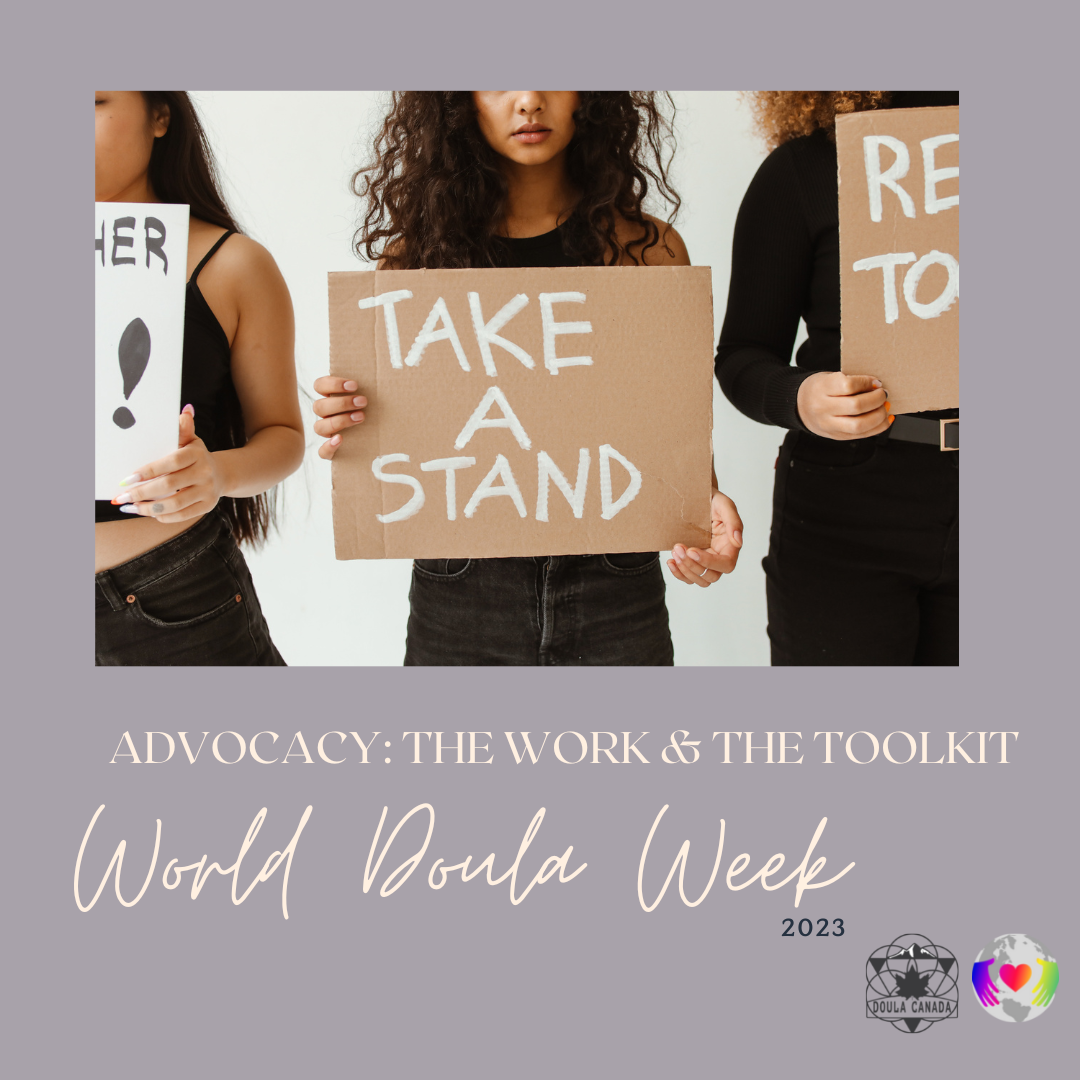
    What is Advocacy?

    “Advocacy” can describe any efforts or actions to change a policy, system, or institution that is in some way harmful to individuals or communities. It can also describe efforts to affect outcomes that are aligned with the needs or interests of particular individuals, groups, or society.

    Current examples of advocacy include the efforts of Indigenous communities to expose the atrocities at residential schools and seek truth and reconciliation from the Canadian government.

    In the context of perinatal healthcare, advocacy is usually focused on updating practices and policies that are not evidence-based, changing the scope, compensation, or other labour conditions of a health profession or occupation, or health equity and patient rights issues.

    In the context of doula practice, advocacy can operate on three levels: self-advocacy, systemic advocacy, and individual advocacy (Gray & Jackson, 2002, Centre for Excellence in Disabilities).

    Advocacy is not without controversy. The line between advocacy and activism is unclear and for many, this has a negative association with confrontation, aggression, and violence (Gray & Jackson, 2002).

    For doulas, this controversy has some unique dimensions. One such dimension is that the field is growing, changing, and still seeking legitimization and security within the healthcare system. Another is that the philosophy of doula practice is largely focused on patient empowerment, making the role of systemic and individual advocacy unclear and subjective among doulas.

    A 2020 paper by S.S. Yam based on interviews with doulas identified three types of tactics that doulas use to advocate for their clients during labour and delivery. She calls these “soft-advocacy” techniques because they differ from what we usually think of as advocacy. Staff and instructors at Doula Canada agreed they used these strategies and had lots of guidance to offer on exactly how to use them. Their guidance was used to develop the advocacy framework.

    The three tactics identified by Yam are 1) creating deliberative space, 2) cultural and knowledge brokering, and 3) physical touch and spatial maneuvers.

    Creating deliberative space refers to strategies that give the client more time to ask questions and make decisions. One example of how doulas do this is by noticing that care that deviates from their preferences is about to happen and bringing it to the client’s attention, prompting them to ask about the intervention that is about to happen.

    Cultural and knowledge brokering refers to the tactics doulas use to make sure the client understands medical jargon or cultural norms. This could involve paying close attention to the information provided by the medical team, observing how well this is understood by the client, and repeating the information in language that the client uses and understands.

    Physical touch and spatial maneuvering refer to the ways we use our bodies and physical contact with the client to advocate for their needs. Examples include using our bodies to conceal the client from view, modelling consent by asking permission each time we touch the client and using our presence to back up the client during interactions.

    All of this is to say that doulas are indispensable in helping pregnant persons navigate the daunting, confusing, and sometimes violating process of giving birth. They are especially valuable for birthers who are already predisposed to face disadvantages in our medical system due to racism and sexism.  Although doulas are poised to mend critical disparities in maternal health, they alone cannot fix inequities in the health system. Standing up for the rights of pregnant persons must go beyond the delivery room and extend into other spheres of advocacy related to disproportionate access to housing, lack of nutritious food, deficient public transportation systems, and inadequate sexual education.  Advocacy needs to happen with all levels of policy makers, hospital administration and the general public.

    Doula Canada has taken our Advocacy Framework and turned it into an accessible tool for birth workers to practice the skills of advocacy for themselves and their clients. It’s downloadable below.

    [/vc_column_text][/vc_column][/vc_row][vc_row][vc_column][mk_padding_divider][/vc_column][/vc_row][vc_row][vc_column][vc_btn title=”Find the Advocacy Toolkit here ” color=”turquoise” link=”url:https%3A%2F%2Fstefanie-techops.wisdmlabs.net%2Fwp-content%2Fuploads%2F2023%2F03%2Fdtc-advocacy-toolkit-2023-1.pdf|target:_blank”][/vc_column][/vc_row]

  • Doula’s Toolbox: Why Birth Affirmations Matter!

    Doula’s Toolbox: Why Birth Affirmations Matter!

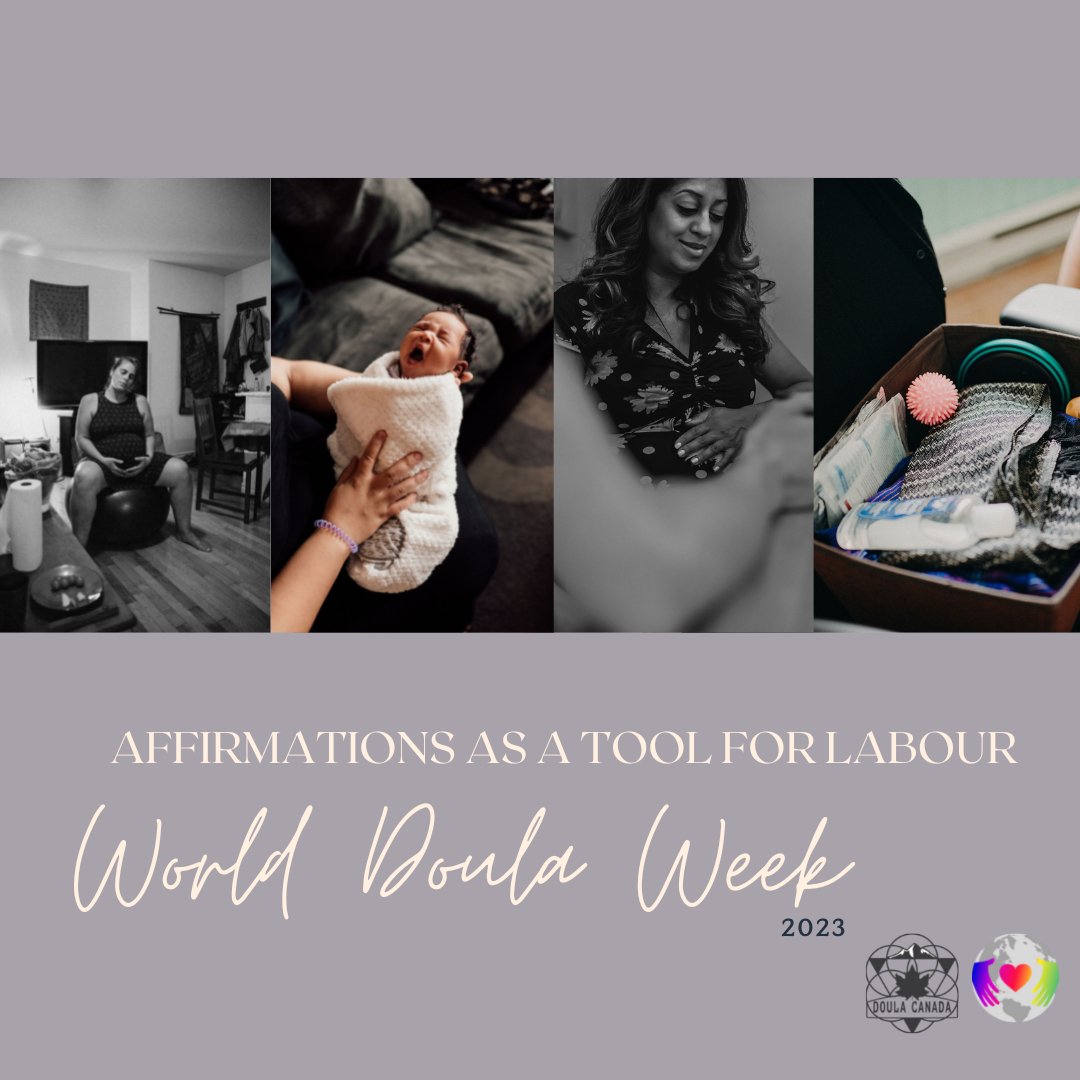
    [vc_row][vc_column][mk_padding_divider][/vc_column][/vc_row][vc_row][vc_column][vc_column_text css=”.vc_custom_1679509016754{margin-bottom: 0px !important;}”]So let’s talk affirmations. The concept of self-affirmation isn’t by any means complex or far-fetched. Positive affirmations are statements or phrases that, when repeated daily, can help challenge negative thoughts and boost self-confidence.

    First, a little science. 

    To understand how positive affirmations work and how you can make the most of them, we have to familiarize you with neuroplasticity, which is the ability to rewire the brain. Despite being one of the most sophisticated and complex structures in the known universe, the human brain can get a little mixed up on the difference between reality and imagination. This very loophole serves as the basis of self-affirmation. To elaborate, when you repeat affirming statements daily, you’re helping your brain create a mental image of the goal you’re trying to achieve or the version of yourself you are aspiring to become.

    Affirmations require regular practice if you want to make lasting, long-term changes to the ways that you think and feel, even for birth. There is MRI evidence suggesting that certain neural pathways are increased when people practice self-affirmation tasks (Cascio et al., 2016). If you want to be super specific, the ventromedial prefrontal cortex—involved in positive valuation and self-related information processing—becomes more active when we consider our personal values (Falk et al., 2015; Cascio et al., 2016). There is also some reasearch asserting that affirmations can reduce the rate of medical interventions during childbirth.Empirical studies suggest positive affirmations can:

    • Decrease health-deteriorating stress (Sherman et al., 2009; Critcher & Dunning, 2015);
    • Help change the way we view “threatening” messages with less resistance and perception (Logel & Cohen, 2012);
    • Self-affirmation has been demonstrated to lower stress and rumination (Koole et al., 1999; Weisenfeld et al., 2001).

    Think of it this way. When you repeat the same thoughts in your head, positive or negative, you start to believe them and your brain forms a pathway of neurons. There is a popular saying: Your words become your world.

    Anyway most importantly the purpose of affirmations in labour is actually quite simple: Birth affirmations are sayings or statements designed to change your mindset and help you maintain a positive outlook or mood regarding the birth process.

    Preparing your mind for labour and birth is really important, and it is no different from eating well or working on specific exercises to prepare your body for labour.

    In order for birth affirmations to work, you need to keep a few things in mind:

    You  have to believe what you’re saying

    When you have a negative thought or fear, recognize it and deal with it first. This study found that participants with low self-esteem who repeated the phrase “I am lovable” actually had more negative emotions and still didn’t feel lovable because they didn’t really believe what they were saying.

    Try to get to the root of your fears or negativity around birth.  Talk to a counsellor, listen to or read positive birth stories and surround yourself with other positive influences.

    Keep in mind that sometimes we have to keep saying affirmations over and over again until we do believe it, which brings me to my next point.

    Repeat, repeat, repeat!

    Create a plan to practice your birth affirmations daily or a few times a week leading up to your birth. Find an affirmation meditation you enjoy, write them in a journal, and practice with your partner, doula or support person, you can even record your own voice memo practicing your affirmations to listen back. Practicing during your pregnancy will make using these affirmations during labour more effective.

    They are not just for vaginal birthing.

    There’s a common misconception that affirmations or hypnobirthing tracks are only helpful for people planning for an unmedicated birth experience. Plus affirmations are a great tool to complement other forms of pain management in your plan (think about that long drive to the hospital before you get an epidural).

    Make them visible: Once your contractions pick up, channelling your focus on affirmations will be more challenging. Print out a copy of your affirmations, save them to your phone, or pack affirmation cards (see the downloadable pdf)  in your bag will give you a visual point of reference to help keep your focus on your affirmations as you ride the waves of labour.

    Now that you’ve got a sense of how affirmations work, where can you find the right positive messages for you?  We have a downloadable PDF with a few ( ALSO for doulas this deck is customizable you can add your logo) you can google, or you can ask friends and family to help you out.

    What matters is that they are meaningful and believable for you![/vc_column_text][/vc_column][/vc_row][vc_row][vc_column][mk_padding_divider][/vc_column][/vc_row][vc_row][vc_column][vc_btn title=”Customizable CANVA affirmation deck ” color=”turquoise” link=”url:https%3A%2F%2Fwww.canva.com%2Fdesign%2FDAFd8HHbv8Y%2F_hEn_HPs8cN6DuVZfUaADw%2Fview%3Futm_content%3DDAFd8HHbv8Y%26utm_campaign%3Ddesignshare%26utm_medium%3Dlink%26utm_source%3Dpublishsharelink%26mode%3Dpreview|target:_blank”][/vc_column][/vc_row]

  • Advocacy at Doula Canada

    Advocacy at Doula Canada

    [vc_row][vc_column][vc_column_text css=”.vc_custom_1669384798061{margin-bottom: 0px !important;}”]Doulas support birthers, babies, and family members during an intimate and emotionally charged experience that often involves many medical twists and turns along the way. For many doula clients, pregnancy and childbirth are among the most complicated experiences with our healthcare system they will have ever had to navigate. We know that birthers need to feel in control of what happens to their bodies and to be making informed choices about their care to create a positive experience and avoid trauma. 

    Doulas can change a person’s healthcare experience for the better by supporting their bodily autonomy and informed decision-making. Additionally, we are well placed to notice systemic issues that impact our clients again and again, and to use our knowledge to encourage and support changes.

    Learning to engage in this type of advocacy within the scope of the doula’s role, so that our efforts are helpful, is an important aspect of our learning and professional development. To support our students and alumni, Doula Canada has developed an advocacy framework that defines advocacy in the context of doula practice and describes approaches to individual advocacy that are aligned with respect for client autonomy. 

    Our framework identifies three categories of advocacy that doulas engage in: systemic advocacy, self-advocacy promotion, and individual advocacy. 

    Systemic advocacy is any effort to change, remove, or add a policy or process that affects the lives of birthers, families, babies, or doulas. Examples include lobbying your elected federal representative to change the birth evacuation policy or amplifying social media campaigns that raise awareness regarding perinatal mental illness.

    While we don’t usually think of it as such, our work with clients to support them to know the evidence regarding their perinatal circumstances, and ask the right questions of their healthcare providers is a form of advocacy. We encourage them to use their voice and make their conversations more effective because they are armed with information.

    Sometimes, especially in the birth room, it might be necessary to advocate for the client in more direct ways. It is important that this individual advocacy does not manifest as speaking for or over the client, or in a manner that could worsen their care or medical situation.

    A 2020 paper by S.S. Yam based on interviews with doulas identified three types of tactics that doulas use to advocate for their clients during labour and delivery. She calls these “soft-advocacy” techniques because they differ from what we usually think of as advocacy. Staff and instructors at Doula Canada agreed they used these strategies and had lots of guidance to offer on exactly how to use them. Their guidance was used to develop the advocacy framework. 

    The three tactics identified by Yam are 1) creating deliberative space, 2) cultural and knowledge brokering, and 3) physical touch and spatial maneuvers. 

    Creating deliberative space refers to strategies that give the client more time to ask questions and make decisions. One example of how doulas do this is by noticing that care that deviates from their preferences is about to happen and bringing it to the client’s attention, prompting them to ask about the intervention that is about to happen.

    Cultural and knowledge brokering refer to the tactics doulas use to make sure the client understands medical jargon or cultural norms. This could involve paying close attention to the information provided by the medical team, observing how well this is understood by the client, and repeating the information in language that the client uses and understands.

    Physical touch and spatial maneuvering refers to the ways we use our bodies and physical contact with the client to advocate for their needs. Examples include using our bodies to conceal the client from view, modeling consent by asking permission each time we touch the client, and using our presence to back up the client during interactions. 

    The complete framework is linked below. It offers more detail on the three types of advocacy and the soft-advocacy strategies. It illustrates these concepts using case studies based on staff and instructor experiences. 

    In 2023, Doula Canada will continue its work to support advocacy among its members by developing an advocacy toolkit from the framework and launching an advocacy working group for students and alumni. [/vc_column_text][/vc_column][/vc_row][vc_row][vc_column][mk_button corner_style=”rounded” size=”large” url=”https://stefanie-techops.wisdmlabs.net/wp-content/uploads/2022/11/advocacy-framework-paper.pdf” align=”center”]Click here to view the full Advocacy Framework document[/mk_button][/vc_column][/vc_row]