Category: Equity & Social Justice

Centering anti-oppression, anti-racism, and decolonization in doula practice. Learn from Indigenous birth work, truth and reconciliation, intersectionality, and equity-driven approaches to care.

  • How do we DOula Advocacy?

    How do we DOula Advocacy?

    [vc_row][vc_column][mk_padding_divider][/vc_column][/vc_row][vc_row][vc_column][vc_column_text css=”.vc_custom_1679688049452{margin-bottom: 0px !important;}”]

    What is Advocacy?

    “Advocacy” can describe any efforts or actions to change a policy, system, or institution that is in some way harmful to individuals or communities. It can also describe efforts to affect outcomes that are aligned with the needs or interests of particular individuals, groups, or society.

    Current examples of advocacy include the efforts of Indigenous communities to expose the atrocities at residential schools and seek truth and reconciliation from the Canadian government.

    In the context of perinatal healthcare, advocacy is usually focused on updating practices and policies that are not evidence-based, changing the scope, compensation, or other labour conditions of a health profession or occupation, or health equity and patient rights issues.

    In the context of doula practice, advocacy can operate on three levels: self-advocacy, systemic advocacy, and individual advocacy (Gray & Jackson, 2002, Centre for Excellence in Disabilities).

    Advocacy is not without controversy. The line between advocacy and activism is unclear and for many, this has a negative association with confrontation, aggression, and violence (Gray & Jackson, 2002).

    For doulas, this controversy has some unique dimensions. One such dimension is that the field is growing, changing, and still seeking legitimization and security within the healthcare system. Another is that the philosophy of doula practice is largely focused on patient empowerment, making the role of systemic and individual advocacy unclear and subjective among doulas.

    A 2020 paper by S.S. Yam based on interviews with doulas identified three types of tactics that doulas use to advocate for their clients during labour and delivery. She calls these “soft-advocacy” techniques because they differ from what we usually think of as advocacy. Staff and instructors at Doula Canada agreed they used these strategies and had lots of guidance to offer on exactly how to use them. Their guidance was used to develop the advocacy framework.

    The three tactics identified by Yam are 1) creating deliberative space, 2) cultural and knowledge brokering, and 3) physical touch and spatial maneuvers.

    Creating deliberative space refers to strategies that give the client more time to ask questions and make decisions. One example of how doulas do this is by noticing that care that deviates from their preferences is about to happen and bringing it to the client’s attention, prompting them to ask about the intervention that is about to happen.

    Cultural and knowledge brokering refers to the tactics doulas use to make sure the client understands medical jargon or cultural norms. This could involve paying close attention to the information provided by the medical team, observing how well this is understood by the client, and repeating the information in language that the client uses and understands.

    Physical touch and spatial maneuvering refer to the ways we use our bodies and physical contact with the client to advocate for their needs. Examples include using our bodies to conceal the client from view, modelling consent by asking permission each time we touch the client and using our presence to back up the client during interactions.

    All of this is to say that doulas are indispensable in helping pregnant persons navigate the daunting, confusing, and sometimes violating process of giving birth. They are especially valuable for birthers who are already predisposed to face disadvantages in our medical system due to racism and sexism.  Although doulas are poised to mend critical disparities in maternal health, they alone cannot fix inequities in the health system. Standing up for the rights of pregnant persons must go beyond the delivery room and extend into other spheres of advocacy related to disproportionate access to housing, lack of nutritious food, deficient public transportation systems, and inadequate sexual education.  Advocacy needs to happen with all levels of policy makers, hospital administration and the general public.

    Doula Canada has taken our Advocacy Framework and turned it into an accessible tool for birth workers to practice the skills of advocacy for themselves and their clients. It’s downloadable below.

    [/vc_column_text][/vc_column][/vc_row][vc_row][vc_column][mk_padding_divider][/vc_column][/vc_row][vc_row][vc_column][vc_btn title=”Find the Advocacy Toolkit here ” color=”turquoise” link=”url:https%3A%2F%2Fstefanie-techops.wisdmlabs.net%2Fwp-content%2Fuploads%2F2023%2F03%2Fdtc-advocacy-toolkit-2023-1.pdf|target:_blank”][/vc_column][/vc_row]
  • Fat.

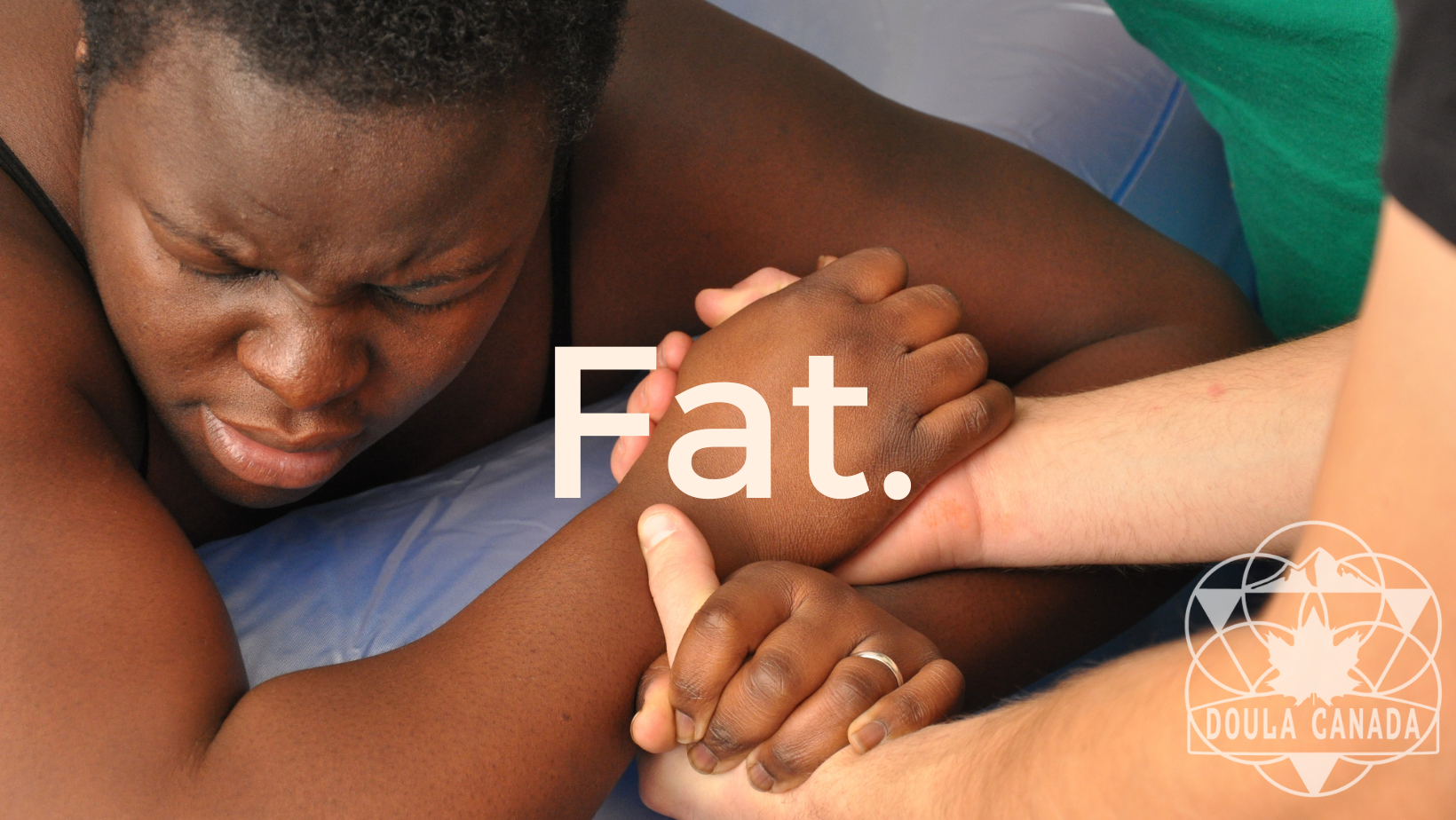
    Fat.

    [vc_row][vc_column][vc_column_text css=”.vc_custom_1644624893514{margin-bottom: 0px !important;}”]

    Fat.

    [/vc_column_text][/vc_column][/vc_row][vc_row][vc_column][vc_column_text css=”.vc_custom_1644624846918{margin-bottom: 0px !important;}”]Read the word.  Read it once, twice, and then again.

    How does reading the word make you feel?  How about saying it aloud? 

    Most of us have learned to treat fat as a bad word and, beyond that, a bad thing to be.  We hear this from our friends and our peers, our families, our communities, the media we consume, and the healthcare systems we turn to when we’re unwell.  Fat is the punch line of countless jokes, the subject of over 40% of New Year’s resolutions[i], and the fuel of a weight loss industry worth $332.8 million in Canada alone[ii].

    Fat people are scrutinized everywhere—in clothing stores that stop at size 14, on airplanes with too small seats, in conversations with relatives that always begin and end with comments on our size.  More than anywhere else, you can find this scrutiny in healthcare.  “Obesity” is listed as a risk factor for almost everything.  Any fat person who has been to a doctor’s office can tell you this. Depressed? Lose weight. Ear infection? Lose weight. Infertility? Lose weight.

    When somebody is pregnant, trying to get pregnant, or even just a person between 20-40 with a uterus, their body is monitored in a whole new way.  They might be told that their weight will stop them from getting pregnant, that it will cause them to miscarry, that gestational diabetes will be inevitable, that they will need to be induced early, that their baby will be big, and on, and on, and on.

    While any of these things might happen to a fat person, they won’t happen because the person is fat. Intentional weight loss is not a magical cure.  In fact, dieting could even lead to further issues with conception or pregnancy, where a nutrient-rich diet is important and weight gain is linked to the healthy development of the placenta, fetus, and pregnant person.

    Over the past several years, there has been a shift in popular culture towards body positivity. Championed by celebrities and social media influencers, body positivity tells us to embrace and love our bodies (and other people’s bodies) as they are.  If this seems like a stretch goal, then we can be body neutral, accepting our body (and other people’s bodies) as they are, as the tools we use to engage with and experience the world.  These approaches can feel revolutionary when we’re used to hating our bodies and can absolutely improve our relationships with ourselves, but they aren’t enough.

    Sofie Hagan, author of Happy Fat, explains, “I am not a body positivity campaigner, I am a fat liberationist. I do not care if you love your body or not, I care about abolishing the systemic discrimination and abuse that fat people endure on a daily basis.  Body positivity is fine, but it doesn’t at all fix the problem.” (Twitter, October 25, 2021).

    The problems that Hagan is talking about are systemic fatphobia and sizeism. 

    Fatphobia tells us that fat bodies are undesirable, unhealthy, and repulsive.  It includes fat jokes in the schoolyard and your grandmother telling you how much weight you’ve gained, but also means that fat people are less likely to be hired, less likely to be seen as attractive, less likely to be taken seriously by their medical providers.  It doesn’t just make people feel bad, it can be a matter of life or death: when Ellen Maud Bennett died of terminal cancer in 2018, her obituary named fatphobia as the cause, explaining, “Over the past few years of feeling unwell she sought out medical intervention and no one offered any support or suggestions beyond weight loss.”[iii]

    Sizeism privileges smaller bodies over larger ones.  Not just through beauty ideals but through the systems and structures that we interact with every day.  This can include everything from insurance policies that have a body mass index (BMI) cutoff to hospital gowns and beds that don’t fit larger bodies.

    To confront fatphobia and sizeism we don’t just need increased confidence in our own bodies, we need a different approach to size and weight.

    The health at every size (HAES) movement is pushing medical providers to recognize that people can be healthy at every size, that fat shouldn’t be treated as an illness, that weight loss shouldn’t be treated as a cure, and that there needs to be (literal and metaphorical) room for fat people in our healthcare system.  It’s an important movement, but still prioritizes health. Fat people can be healthy or unhealthy, thin people can be too. All of us, regardless of size, will experience variations in our health throughout our lives.  We don’t owe anybody good health, and we don’t need to be healthy to deserve respect.

    We need fat positivity: a mental and systemic shift that includes and embraces fat bodies, regardless of health. [/vc_column_text][vc_separator color=”white”][/vc_column][/vc_row][vc_row][vc_column][vc_column_text css=”.vc_custom_1644624383626{margin-bottom: 0px !important;}”]So, as a doula, how can you provide fat positive support?[/vc_column_text][vc_column_text css=”.vc_custom_1644624485528{margin-bottom: 0px !important;}”]1. Don’t ask about or comment on your client’s weight.[/vc_column_text][vc_column_text css=”.vc_custom_1645143545782{margin-bottom: 0px !important;}”]2. If your client asks about how being fat will impact them during conception, pregnancy, or birth, share evidence-based information and resources that are size inclusive.[/vc_column_text][vc_column_text css=”.vc_custom_1644624540161{margin-bottom: 0px !important;}”]3.Support your client through their healthcare experiences.  If your client is worried about weight checks, let them know that they have a right to refuse or to ask why they are being weighed.  If they are worried about whether a hospital or birth centre will accommodate them (from weight limits on hospital beds to BMI limits on epidurals), contact the birth location to find out.[/vc_column_text][vc_column_text css=”.vc_custom_1644624580474{margin-bottom: 0px !important;}”]4. Provide emotional support, recognizing the trauma that many fat people have experienced in healthcare.  Your client might feel anxious, avoidant, or upset when having to interact with healthcare providers or entering doctors’ offices or hospitals.  Validate these feelings.[/vc_column_text][vc_column_text css=”.vc_custom_1644624610152{margin-bottom: 0px !important;}”]5. Recognize that everything from common birth support positions to equipment like birth balls or birthing pools haven’t been made with fat people in mind.  Consider in advance how to adapt your support to include fat bodies.  If your client is comfortable, this can include practicing support positions to see how they feel for you and your client, as well as any other support people involved.[/vc_column_text][vc_column_text css=”.vc_custom_1644624639055{margin-bottom: 0px !important;}”]6. Examine your own biases.  We grow up in a fatphobic and sizeist world, and internalize these beliefs from a very young age. Ask yourself what you think and feel about fat bodies, then ask yourself why.  This is hard, ongoing, and crucial work.[/vc_column_text][vc_separator color=”white”][/vc_column][/vc_row][vc_row][vc_column][vc_column_text css=”.vc_custom_1645287465765{margin-bottom: 0px !important;}”]Fat people deserve to have our pregnancies and births treated with respect and care. We deserve health systems that see us as whole people and not as problems. We deserve to have our strength and capacity recognized.  We deserve partners, healthcare providers, and doulas who support, affirm, and hold us as we are.

    Interested in learning more?  Sign up for Doula Canada’s webinar on Addressing Sizeism and Fatphobia in Birth Work, happening on February 27th from 12:30pm-1:30pm EST.[/vc_column_text][vc_separator color=”white”][vc_btn title=”Click here to register for our FAT: ADDRESSING SIZEISM AND FATPHOBIA IN BIRTHWORK webinar” color=”mulled-wine” align=”center” link=”url:https%3A%2F%2Fstefanie-techops.wisdmlabs.net%2Ftraining%2Ffat-addressing-sizeism-and-fatphobia-in-birthwork%2F|||”][vc_separator color=”white”][/vc_column][/vc_row][vc_row][vc_column][vc_column_text css=”.vc_custom_1645287477111{margin-bottom: 0px !important;}”][i] https://today.yougov.com/topics/lifestyle/articles-reports/2020/01/03/canada-new-year-resolutions

    [ii] https://www.ibisworld.com/canada/market-research-reports/weight-loss-services-industry

    [iii] https://www.legacy.com/ca/obituaries/timescolonist/name/ellen-bennett-obituary[/vc_column_text][/vc_column][/vc_row]

  • National Day for Truth and Reconciliation

    National Day for Truth and Reconciliation

    [vc_row][vc_column][vc_column_text css=”.vc_custom_1632997516706{margin-bottom: 0px !important;}”]September 30th is now National Day for Truth and Reconciliation. So what does this mean? How does it relate to doula care and birth work?

    The National Day for Truth and Reconciliation comes after decades of emotional labour and advocacy from Indigenous communities, as well as a year of grieving Indigenous children and investigating the tragedies of the residential school system. Not only did Indigenous families experience the horrors of this system, but many others as well, such as the epidemic of Missing and Murdered Indigenous Women and Girls (MMIWG), the 60’s scoop, and current extraction of environmental resources.

    This is not history. This is happening now. Something needs to change.

    Why are we asking members to reflect today? Besides being citizens on Indigenous lands, birth and postpartum workers interact directly with Indigenous families, and play an integral role in mitigating systemic oppression and intergenerational trauma.

    For example:

    • Providing culturally sensitive care and awareness when working with Indigenous families
    • Providing trauma-informed care for those impacted by violence and adult child survivors of the child protection system
    • Creating space for cultural birthing practices
    • Advocating against racialized medical violence

    Getting comfortable with truth and reconciliation requires a lot of discomfort. This is okay. It is only when we face our shortcomings head on that we can progress toward change. We welcome you to reflect on some questions today.

    Reflection Questions for Doulas:

    • How have I benefited from capitalism, colonialism, and extraction of resources?
    • How have I upheld colonial norms that can potentially cause harm?
    • What did I learn growing up about the history of Canada and Indigenous Peoples?

    When we can acknowledge we are a product of wider system indoctrinations like white supremacy, colonialism, etc. we can separate our character from the issues at hand. Good people can do harm. Good people are capable of racism, classism, and perpetuating colonial norms. Shame restricts us from moving forward.

    In an effort to show this to you, here is mine. As an Indigenous person, I am still capable of perpetrating colonial harm.

    1. I benefited from colonial post-secondary institutions and obtaining a western education
    2. I have upheld colonial norms in the social work field as a mandated reporter
    3. I learned in elementary school that Canada obtained the land fairly and through agreement with Indigenous Peoples. Since then, I have done a degree in Indigenous Studies and learned about the tragedies of colonialism.

    Don’t know where to start? Dr. Lynne Davis of Trent University and her class “Transforming Settler Relations” have compiled a database of Canadian initiatives that support allyship, education, and decolonization. Find an initiative here: https://transformingrelations.wordpress.com/

    You can take action today by signing up for our trauma series this fall. The workshop “Intergenerational Trauma: The Doula Connection” on October 28 from 7-8:30pm EST will focus primarily on working with Indigenous families impacted by trauma and systemic oppression. All proceeds will go to The Indigenous Foundation.

    To any Indigenous and non-Indigenous doulas who have questions, need support, or would like to chat about truth and reconciliation, please contact Kayt at kayt@stefanie-techops.wisdmlabs.net

    Miigwetch,
    Kayt Ward (She/Her)
    Indigenous Inclusion and Engagement Lead, BSW[/vc_column_text][/vc_column][/vc_row]

  • Applying an Equity, Diversity, and Inclusion Lens to our Curricula

    Applying an Equity, Diversity, and Inclusion Lens to our Curricula

    [vc_row][vc_column][vc_column_text css=”.vc_custom_1626172064269{margin-bottom: 0px !important;}”]In Fall 2020, Doula Canada circulated a survey that was looking to hear specifically from members self-identified as belonging to equity-seeking groups such as, but not limited to, Indigenous, Black, racialized, immigrants or newcomers, LGBTQ2S+, and/or disabled peoples. We really wanted to hear directly from members about their experiences, learn from them, and listen for ways that they felt that we could do better. Something that came up repeatedly was the gaps in our curriculum materials that resulted in members feeling excluded – things like gendered language, white dominant images, only heteronormative references, limited or inappropriate cultural references, and more. We were feeling this too and it was powerful to hear it echoed back at us!

    We certainly see that, historically, the primary narrative in education and training in the perinatal field (especially in Canada) centers and reflects persons and experiences characterized in the following ways: white (including white/light skin tones and hair that tends towards long, blonde/brown and straight/wavy), in a heterosexual and racially homogenous couple, able-bodied, thin, 30-something, with pregnancy intentional and resulting from sexual intercourse between a cisgender woman and man. This narrative has been applied to both doula clients and doulas themselves. It is seen in images, language, resources and references, and focus of discussions. This narrative leaves so many valued people and groups OUT.

    In late 2020, we took deeper action to change this narrative in our own house by initiating the development of a robust Curriculum Checklist that is built around an intentional integration of an equity, diversity, and inclusion (EDI) lens in curriculum materials (oral and written). Yes, a checklist sounds like it could be ugh when it comes to EDI work  – like a token action that gets people off the hook from doing any deeper, transformational work. We thought about that! Our Curriculum Checklist is for internal and external course developers and instructors who work with Doula Canada. It pushes them to reflect on how people who differ from the primary narrative are excluded and ignored, or, are mentioned and described in ways that present them as out of the ordinary. The Checklist means that dominant biases get reduced or removed from our curriculum through an intentional and guided change in language, images, references, and resources. The Checklist is also part of our Equity, Diversity and Inclusion (EDI) Action Plan (that we will officially launch soon). 

    We have just started to test out the Checklist in practice. We will watch the results and take action as required. We see it as a living document that will be continuously refined and improved. Right now, it largely focuses on sexual orientation, gender identity, race, and culture as areas where the dominant narrative is exclusionary. We have started adding more on intentional inclusion of Indigenous Peoples and disabled people.

    Wondering what it looks like? Here are a few snippets![/vc_column_text][/vc_column][/vc_row][vc_row][vc_column][vc_single_image image=”377355″ img_size=”full”][/vc_column][/vc_row]

  • Doula Canada: Anti-racism statement

    Doula Canada: Anti-racism statement

    [vc_row][vc_column][vc_column_text css=”.vc_custom_1591719683296{margin-bottom: 0px !important;}”]Friends, 

    Our hearts feel heavy, and we know many of yours are as well.

    We hear the pain and outrage being expressed by our Black and Indigenous communities and we acknowledge that as primarily white presenting persons our community of doulas and educators has played a role in the disenfranchisement of others. The senseless death of Black and Indigenous persons has stopped us on our path, and we are welcoming you to become more mindful as we journey forward.  

    Many of us at the Doula Canada are parents who emphasize with the desperate or fear-filled cries of a child calling out for help. No community should have to endure the devastating and violent loss of a life due to racism, violence, and systemic inequity.  We grieve for Black and Indigenous persons in our communities. The deaths of George Floyd, Chantel Moore, and Regis Korchiski-Paquet are just a few of the deaths that lend themselves to the discussion about how racism has too often led to tragic outcomes, and without any acceptable explanation. 

    Change.  New, reimagined policy and a kind, inclusive culture is absolutely needed at all levels and in all corners of our society to ensure equity and justice.  This includes equity and justice in birthing environments, access to care, and equitable support.  We can make a change.  We must make a change.

    At Doula Canada we have a diverse community – persons of all colors, communities, backgrounds, beliefs, genders, and interests – join birth work weekly. We are invested in the interests of all of our students, and want everyone to feel like they fully belong in this special place of learning.

    Our work at Doula Canada revolves around supporting our students with the tools to tend their wellness, on a physical level, but also on emotional and spiritual levels.  Inequality and systemic racism most certainly impact wellness. They are a root cause of disease and we, as a society of birth workers, must name the root cause of the disease that affects the health of our community and individual members. The fundamentals of this doula community has always been to honour life in all its forms.  At its very core that is what doula work hopes to achieve –  the support and celebration of life.

    This past week Doula Canada participated in the #amplifymelanatedvoices campaign, Blackout Tuesday and muted our social media, newsletters, and events throughout the week in order to highlight BIPOC birth workers, teachers, businesses, and creators in Instagram stories. We paused, listened, reflected, and let other voices be heard. We will continue to listen.

    Many of you in our student community and colleagues, educators, and friends reached out with resource lists, specifically networks of BIPOC birth workers. We are so grateful for that.  Thank you for being a part of Doula Canada.  Thank you for helping us be a part of the discussions of change.

    Here is what we are learning and how we will continue to participate in this movement for change:

    1.  We understand that we as people and as a business have a responsibility to educate ourselves about institutional racism and to take actions, big and small, immediate and ongoing, to support change. Change can only happen when we acknowledge a problem and that we may be a part of the problem. This calls for self-examination and is something we’ve approached in the past but we have prioritized and amped up these efforts this past week and consider this an ongoing process. The Doula Canada leadership team has committed to educating ourselves further about ongoing, unjust, deeply rooted systemic racism that is unfair, painful, and even life-threatening for so many. We have been conversing with many of our students and contributors and we are seeking out resources for learning. As a next step, we are putting together an educational program for our internal team. It starts within. 

      Here are programs and books you may consider to start this important work:

      1. Woke Without the Work course from Rootwork Herbals
      2. Beyond Inclusion, Beyond Empowerment: A Developmental Strategy to Liberate Everyone by Leticia Nieta with Margot F. Boyer and co-authors 
      3. Me and White Supremacy by Layla Saad
      4. White Fragility by Robin DiAngelo
      5. Racism & Privilege in Birth Work by Birthing Advocacy 
    2. It is good to start within with deep reflection and learning, but action is necessary by all organizations. Everyone can do better. To this end, we are committed to continuing to take a deeper look at how we as an officially registered incorporation can make choices in support of organizations for BIPOC communities and a more just society. Action will continue beyond one week; we are only just beginning this work.  If you have an organization that you feel would benefit from the support of our Doula Canada
      community please email it to shaunacy@stefanie-techops.wisdmlabs.net or sondra@stefanie-techops.wisdmlabs.net 
    3. We recognize that we can do better to diversify our marketing and our curriculum.  This means that we are working to represent more voices and faces in media and written contributions moving forward. In March 2020 we interviewed for the BIPOC Coordinator role and find ourselves still waiting for the acceptance of someone for that position.  We recognize that this is an important role on our team and we are committed to finding the right person for this position soon.  If you are interested in applying please email sondra@stefanie-techops.wisdmlabs.net with your resume to start the conversation.
      We also put a call out to our community about blogging opportunities that anyone can apply to and are encouraging BIPOC birth workers and writers to apply.  We will not ask for your time or your effort for free.   We are reaching out to BIPOC birth workers to share your message and your knowledge on our platform.  We hope that together we can share the correct history of how doula work has come into its present forms through many different cultures and traditions. If you are interested in applying please email sondra@stefanie-techops.wisdmlabs.net with your resume to start the conversation.  
    4. We have been exploring ways we can diversify our educational programs as we continue to work on course development. We will be auditing all Doula Canada program and creating opportunities to represent traditions from various cultures in our curriculum for all programs. We hope to work with birth workers who are connected to these heritages and who are involved in practicing doula work as a continuation of these traditions. 
    5. This past week, we asked our community to share with us the social media accounts of some of their favourite Black birth workers. Thank you to those of you who shared with us! We have begun following these accounts and will continue to share the important messages they post.  We look forward to learning from these doulas and educators.

    While change doesn’t happen overnight, we will actively pursue these initiatives now and into the future. 

    We acknowledge that many of us directly involved at Doula Canada benefit from white privilege. We present as a white woman-owned and -operated organization, and we will not claim that we can understand the pain that our Black and Indigenous members have felt.

    Please know that as a “school” and as your educators we accept the responsibility to unlearn the ingrained values of privilege.  We work to relearn, to engage in crucial dialog, to bring diverse voices and faces to our platform, and to enrich our offerings with wider cultural representation.

    Many members have reached out to express feelings, share experiences, provide insight and suggestions for ways to be more inclusive, as well as to offer grace, encouragement, and motivation as we emphatically support change. We cannot promise we will get it right every time, but we will put our best intentions forward and we will sustain these efforts to ensure Doula Canada is representative of its members. 

    We are dedicated to using our voice and our platform to help drive and support the path to healing and change.

    In gratitude,

    Shaunacy King (Director) & the Doula Canada Team
    Doula Training Canada Inc.
    www.stefanie-techops.wisdmlabs.net [/vc_column_text][/vc_column][/vc_row]

  • The Right to Support: Advocacy During COVID-19

    The Right to Support: Advocacy During COVID-19

    [vc_row][vc_column][vc_column_text css=”.vc_custom_1586274531767{margin-bottom: 0px !important;}”]Doula Canada believes in the right of doulas to autonomously choose whether they wish to continue supporting clients during this time, or whether they choose to not continue support at this time.

    Each provincial health care system and many individual birthing institutions have their own policies and practices in place.  As such it is difficult to formulate “one size fits all” advocacy that encapsulates the needs of all Doula Canada members.

    We believe our professional members will research the current situations and support options in their individual communities and provinces and will choose to support clients in a manner that speaks to their comfort, their professional, and their communities needs.

    In the days and weeks to come Doula Canada will provide members and the families we support with a variety of documents that they may or may not choose to use in the advocacy and support of families across Canada.

    We are grateful to the frontline workers who are tirelessly working to flatten the curve of COVID-19 and in no way want to detract from the real concerns of low resources related to personal protective equipment.  Our statements support that should PPE not be available for support that it should go to frontline workers first.  If, however, PPE is available for at least one support person of choice at a birth then we hope our community stakeholders will see the value and importance of autonomous choice that may include professionally trained doulas.

    Together in long-term health for all,
    Doula Canada administration, staff, and membership[/vc_column_text][mk_padding_divider][/vc_column][/vc_row][vc_row][vc_column width=”1/3″][vc_btn title=”The Right Support: Statement on Autonomous Choice” style=”classic” shape=”square” color=”mulled-wine” size=”lg” align=”center” link=”url:%2Fwp-content%2Fuploads%2F2020%2F04%2Fdtc-right-to-choose-support-04_07_20.pdf||target:%20_blank|”][/vc_column][vc_column width=”1/3″][vc_btn title=”Letter to MPP: Right to One Support” style=”classic” shape=”square” color=”mulled-wine” size=”lg” align=”center” link=”url:%2Fwp-content%2Fuploads%2F2020%2F04%2Ffamily-letter_-mpp-address-re_-no-one-should-birth-alone-.docx||target:%20_blank|”][/vc_column][vc_column width=”1/3″][vc_btn title=”COVID-19 Recommendations (Resource List)” style=”classic” shape=”square” color=”mulled-wine” size=”lg” align=”center” link=”url:%2Fwp-content%2Fuploads%2F2020%2F04%2Fcovid-recommendations-list-of-resources.pdf||target:%20_blank|”][/vc_column][/vc_row][vc_row][vc_column][mk_padding_divider][/vc_column][/vc_row][vc_row][vc_column][vc_btn title=”Informed Consent Form for Refusal of Separation from Newborn Infant” style=”classic” shape=”square” color=”mulled-wine” size=”lg” align=”center” link=”url:%2Fwp-content%2Fuploads%2F2020%2F04%2Finformed-consent-form-for-refusal-of-separation-from-newborn-infant.pdf||target:%20_blank|”][/vc_column][/vc_row]

  • How We Can Act: The MMIWG Inquiry Final Report and Calls for Justice

    How We Can Act: The MMIWG Inquiry Final Report and Calls for Justice

    [vc_row][vc_column][vc_column_text css=”.vc_custom_1560260285382{margin-bottom: 0px !important;}”][/vc_column_text][mk_padding_divider][/vc_column][/vc_row][vc_row][vc_column][vc_column_text css=”.vc_custom_1560260682164{margin-bottom: 0px !important;}”]Doula Training Canada’s Indigenous Doula Consultant Miranda reflects on the release of the Murdered and Missing Indigenous Women and Girls Inquiry report and how we as citizens of Canada, and birth professionals can work towards self reflection and change. [/vc_column_text][mk_padding_divider size=”12″][/vc_column][/vc_row][vc_row][vc_column][vc_column_text css=”.vc_custom_1560260346551{margin-bottom: 0px !important;}”]The final report of the Murdered and Missing Indigenous Women and Girls (MMIWG) National Inquiry was released on June 3. The report, entitled ‘Reclaiming Power and Place: The Final Report of the National Inquiry into Missing and Murdered Indigenous Women and Girls’, comes in two volumes and issues 231 ‘Calls for Justice’ as essential next steps to end and redress the colonial violence against Indigenous women, girls and 2SLGBTQQIA (two-spirit, lesbian, gay, bisexual, transgender, queer, questioning, intersex and asexual) people.

    You may be wondering where to begin integrating the findings of this report and the Calls for Justice into your daily life. The vast majority of the Calls to Justice are directed toward all levels of government, and those in the media, health and child welfare systems, law enforcement, criminal justice, education, and extractive and development industries. There are also Calls for Justice for all Canadians, which can serve as a framework and starting place for you. They are as follows:

    • Denounce and speak out against violence against Indigenous women, girls, and 2SLGBTQQIA people.
    • Decolonize by learning the true history of Canada and Indigenous history in your local area. Learn about and celebrate Indigenous Peoples’ history, cultures, pride, and diversity, acknowledging the land you live on and its importance to local Indigenous communities, both historically and today.
    • Develop knowledge and read the Final Report. Listen to the truths shared, and acknowledge the burden of these human and Indigenous rights violations, and how they impact Indigenous women, girls, and 2SLGBTQQIA people today.
    • Using what you have learned and some of the resources suggested, become a strong ally. Being a strong ally involves more than just tolerance; it means actively working to break down barriers and to support others in every relationship and encounter in which you participate.
    • Confront and speak out against racism, sexism, ignorance, homophobia, and transphobia, and teach or encourage others to do the same, wherever it occurs: in your home, in your workplace, or in social settings.
    • Protect, support, and promote the safety of women, girls, and 2SLGBTQQIA people by acknowledging and respecting the value of every person and every community, as well as the right of Indigenous women, girls, and 2SLGBTQQIA people to generate their own, self-determined solutions.
    • Create time and space for relationships based on respect as human beings, supporting and embracing differences with kindness, love, and respect. Learn about Indigenous principles of relationship specific to those Nations or communities in your local area and work, and put them into practice in all of your relationships with Indigenous Peoples.
    • Help hold all governments accountable to act on the Calls for Justice, and to implement them according to the important principles set out in the final report.

    [/vc_column_text][/vc_column][/vc_row][vc_row][vc_column][vc_separator color=”mulled_wine”][/vc_column][/vc_row][vc_row][vc_column][vc_column_text css=”.vc_custom_1560261171118{margin-bottom: 0px !important;}”]There are also Calls of Justice that are applicable to us in our roles as doulas and childbirth educators. The report calls upon governments, health service providers, and child welfare services to:

    Recognize that Indigenous Peoples are the experts in caring for and healing themselves, and that health and wellness services are most effective when they are designed and delivered by the Indigenous Peoples they are supposed to serve, in a manner consistent with and grounded in the practices, world views, cultures, languages, and values of the diverse Inuit, Métis, and First Nations communities they serve.

    • Provide necessary resources, including funding, to support the revitalization of Indigenous health, wellness, and child and Elder care practices. This includes matriarchal teachings on midwifery and postnatal care for both woman and child.
    • Ensure that all persons involved in the provision of health services to Indigenous Peoples receive ongoing training, education, and awareness in areas including, but not limited to: the history of colonialism in the oppression and genocide of Inuit, Métis, and First Nations Peoples; anti-bias and anti-racism; local language and culture; and local health and healing practices.
    • End to the practice of targeting and apprehending infants (hospital alerts or birth alerts) from Indigenous mothers right after they give birth.
    • Ensure the availability of effective, culturally appropriate, and accessible health and wellness services within each Inuit community. This includes the establishment and funding of birthing centres in each Inuit community, as well as the training of Inuit midwives in both Inuit and contemporary birthing techniques.

    These Calls for Justice present us with points for reflection in our practices as doulas and childbirth educators. How do you support Indigenous Peoples as experts in their own health? How can you lend support to revitalization of Indigenous health and wellness practices? Are you pursuing ongoing training and education to expand your understanding of colonization and local Indigenous Peoples, cultures, and practices? I invite all of us to reflect on our practices and examine how we can act on the Calls of Justice above.

    We each have the opportunity to be a change agent in our community. We are at the frontline of birth culture and can act as advocates at a systemic level. We can collaborate and strategize to make doula services and childbirth education more accessible to Indigenous Peoples. We can support the training and mentorship of Indigenous doulas and childbirth educators, and build communities of practice around them. We can build working relationships with local Indigenous communities and service agencies. We can connect Indigenous families to Indigenous Patient Liaisons, Cultural Liaisons and Elders in Residence, or advocate for these positions if none exist in your local hospitals. We can build relationships with local health care providers and ask how they are responding to these Calls to Justice.

    We have a collective responsibility to consider how our work can disrupt the status quo of societal and institutional violence against Indigenous women, girls and 2SLGBTQQIA people. I welcome your stories of how you are enacting these Calls for Justice in your work.

    Here are some resources to support you further in your learning:

    [/vc_column_text][/vc_column][/vc_row][vc_row][vc_column][mk_padding_divider][/vc_column][/vc_row][vc_row][vc_column][vc_column_text css=”.vc_custom_1560263737788{margin-bottom: 0px !important;}”]

    Miranda Kelly Indigenous Doula Consultant Doula Canada

    Miranda Kelly is Stó:lô from Soowahlie First Nation, living in the unceded, ancestral lands of the Squamish, Musqueam and Tsleil-Waututh (Vancouver, BC). She is a wife and mother of two. She has worked professionally in Indigenous health in a variety of research, policy and education roles for over a decade. Miranda holds a Bachelor of Science degree from the University of Victoria and a Master of Public Health degree from the University of British Columbia. She is a certified Birth and Postpartum Doula and currently completing certification as a Childbirth Educator. As a member of the ekw’i7tl doula collective, she provides full spectrum doula services to Indigenous families and helps build a community of practice among Indigenous doulas in Vancouver. She is proud to join the amazing team at Doula Canada in the newly created role of Indigenous Doula Consultant. https://www.mirandakelly.com/[/vc_column_text][/vc_column][/vc_row]