Category: Equity & Social Justice

Centering anti-oppression, anti-racism, and decolonization in doula practice. Learn from Indigenous birth work, truth and reconciliation, intersectionality, and equity-driven approaches to care.

  • Gender-open parenting starts on day one

    Gender-open parenting starts on day one

    [vc_row][vc_column][vc_column_text css=”.vc_custom_1722343166871{margin-bottom: 0px !important;}”]It’s non-binary awareness week which lends a great opportunity to open a dialogue about gender-open parenting. It’s a practice-based approach to acknowledging that a person’s gender identity can be fluid and does not always align with the sex assigned based on a visual assessment of external genitalia at birth. Parents taking a gender-open approach take actions like choosing a gender-neutral name, building a wardrobe that includes “boys”, “girls” and neutral clothes, using they/them pronouns by default until the child chooses gender-specific ones, and offering the full range of toys and activities to choose from regardless of customary gender associations. This leaves the child free to explore and express their gender in their own time and way, including embracing non-binary, gender-fluid, and agender identities.

    It sounds simple, but it’s not. The gender segregation of humans starts at birth or before. When my son was born he was swaddled in a reversible hospital blanket that could have pink facing out for babies with innies, and blue facing out for babies with outies. Often, if the baby’s sex is known or suspected before birth people will begin using gendered pronouns and language.

    It also sounds relatively uncontroversial. After all, gender-specific clothing for infants wasn’t really a thing until part way through the 20th century. All little boys wore dresses until they were about school-aged. Haircuts were also not gender specific and names have flipped-flopped between and across genders based on region and fashion. Yet, less than 15 years ago when a Toronto family announced that they were raising their child gender-open, and to that end not disclosing the child’s biological sex to anyone outside of immediate family and healthcare providers, it created a community uproar that made headlines.

    People who had nothing to do with this family were outraged, with some going so far as to call not sharing the nature of their child’s external genitalia with society at large “child abuse”. The move was ingenious in that it required people interacting with the child to use they/them pronouns or the child’s first name, which was exactly the source of outrage.

    Most parents who raise their child gender open find this plan goes down the tubes if anyone learns the child’s sex assignment. Once this information becomes known they find themselves dealing with such a flood of gendered language, behaviour, and expectations that stopping it is like putting the proverbial finger in the dam. Some studies show that adults caring for newborn girls are more likely to refer to them as “pretty”, and “sweet” and newborn boys as “strong” and “smart”. The continuous conditioning to conform to gendered expectations continues from there.

    Sadly, with confidentiality comes censure, especially since this is often kept from extended family members as well. A common valid concern is that the child will feel pressured to keep the secret as they grow older causing shame about their body and other psychological harm. In reality, gender identity typically asserts itself in early childhood, unlike sexual orientation which asserts itself at the onset of puberty. By the time they are old enough to speak well and be in social situations where they are changing around other kids, they will likely have chosen suitable pronouns and other gender markers that work for them. The child is never expected to keep a secret, rather it is the adults caring for them who are expected to maintain their privacy.

    So, if you’re a birth worker supporting a family choosing to raise their child gender open or considering it, what can you do to affirm their choices?

    Queer Culture

    Often families making this choice are culturally queer, meaning that regardless of their own sexual and gender identity they are heavily immersed in and accepted by the queer and trans community. Affirming their right to parent gender-open is part of affirming their right to live open queer/trans lives, and raise their kids in the community.
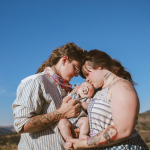
    A growing number of people who are not culturally queer are starting to move toward gender-open parenting. In certain ways, those parents face additional challenges, in that they are not as likely to be connected to a community, including healthcare and childcare providers, who are familiar with and supportive of this choice. In this instance, an affirming, queer/trans-competent doula has the power to make a huge difference in their ability to implement this choice by respecting and normalizing their preferences, connecting them with community support, and helping them brainstorm practical ways to avoid gendering their child.

    Self Reflection

    In some ways, people in Baby’s sphere who don’t know what’s inside their diaper have it easier. If you were there when they were born, or if postpartum support includes diaper changes, you don’t have the advantage of sincerely not knowing their sex assignment.

    Don’t take that running stream of babble you’re maintaining with your young charge for granted. Be open to noticing the gendered implications of the way you’re engaging. In addition to language, there’s evidence that caregivers play with and speak with baby girls more gently than boys. Do you notice these behaviours in yourself? Can you consciously move the needle toward more gender-neutral interactions?

    Also, remember that while the baby’s sex assignment might not be confidential information for every family, it may be highly so for this family. Have a clear conversation with the parents about their preferences and try not to let that information slip.

    It’s Tough Out There

    The intro to this article made it sound like you just had to do a handful of things, and voila – you’re parenting gender open. In reality, most parents who are quite gender aware, including trans and non-binary parents find it far more challenging than they thought it was going to be. Not knowing a person’s gender makes most people uneasy. It’s one of the most ingrained ways of sorting humans into categories. With uneasiness comes resistance. Moreover, much of how gender expectations are conditioned is subtle and can’t be avoided by using a certain pronoun or making sure all the clothes are yellow, green, and natural tones.

    Parents need significant emotional support from people who understand why this choice is important to them. Just holding space for how challenging it is and encouraging them to preserve their values is an invaluable way that a birth worker can have a positive impact.

    Keira Grant (she/her) Inclusion and Engagement Lead – Racialized Communities

    Keira brings a wealth of experience to the Online Community Moderator role. She is a Queer, Black woman with a twenty-year track record in Equity, Diversity, and Inclusion (EDI) education, projects, and community building initiatives.[/vc_column_text][/vc_column][/vc_row]


  • Disability as a source of strength

    Disability as a source of strength

    [vc_row][vc_column][vc_column_text css=”.vc_custom_1722343298968{margin-bottom: 0px !important;}”]

    Often, when we think about disability, the focus is on what an individual is unable to do. However, given that 22% of Canadians live with some form of disability it’s clear that people with disabilities are capable of quite a lot.

    Disability Pride Month has been observed in July in the US since the Americans with Disabilities Act was passed in 1990. It is now observed around the world, including in Canada. It creates an opportunity to highlight the strengths and contributions of disabled people and dismantle limiting beliefs about the nature of disability.
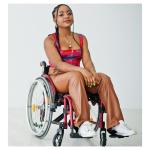
    The term disability is designed to acknowledge that a person’s ability is limited by social and structural barriers that disenfranchise them and limit their participation.

    In order to survive, many disabled people have to be ingenious in navigating a world that isn’t designed for them and which frequently doesn’t account for their existence. A strength-focused disability lens emphasizes the things the disabled person can do, using this as a starting point to reduce and remove barriers. It takes the view that what we construct as disability is simply natural variation among individuals and something to be celebrated rather than stigmatized. It’s a person-centered approach that prioritizes the disabled person’s right to self-determination and trusts that they are the expert on their strengths and limitations.

    A strength-focused lens is a constructive framework for birthworkers supporting disabled birthers and new parents. These clients are up against many limiting beliefs regarding their ability to give birth and care for their newborns. For example, many prenatal healthcare providers believe that wheelchair users cannot push to deliver a baby and therefore must have early scheduled c-sections. This is not always true and there’s no evidence-based reason for that belief. A couple of years ago, we hosted a panel discussion of disabled parents, two of whom were wheelchair users who had birthed vaginally. One of them birthed precipitously. They both had to resist limiting beliefs on the part of care providers to realize the empowering births they deserved.

    Several of the parents on that panel described intense surveillance in the hospital after their babies were born. The feeling that they were being watched and that people around them were waiting for them to fail rather than offering support was widespread.

    Encouraging people to take pride in their bodies and their ability to birth their babies is at the heart of our calling as doulas. Disabled people have so many reasons to feel proud of what their bodies have achieved. We can remind our clients that they have already come up with countless life hacks to get things done. These are all skills that they can transfer to the new situation of childbirth and infant care. We can let them know that we know that they’re a lot stronger than most people think they are. And where they are not strong, that’s okay, we’ve got their back if help is needed and wanted. We can be that person they remember as someone who didn’t make assumptions about what they could do, but asked questions instead.



    With such a high proportion of the population being disabled our birth work practices will inevitably include disabled people in the form of clients, colleagues, and ourselves. We see every one of you who provides long hours of birth support despite your chronic pain, or mental illness that requires regular sleep to stay in remission. We see all of you who tap into an extra reserve of energy to soothe a colicky baby or extend compassion to a new mother with postpartum depression. Your effort and your sacrifice matters. You deserve to take pride in the strengths of your body and mind that you share with your community each day.

    Keira Grant (she/her) Inclusion and Engagement Lead – Racialized Communities

    Keira brings a wealth of experience to the Online Community Moderator role. She is a Queer, Black woman with a twenty-year track record in Equity, Diversity, and Inclusion (EDI) education, projects, and community building initiatives.[/vc_column_text][/vc_column][/vc_row]


  • 2024 Medicaid & CHIP Beneficiaries at a Glance: Maternal Health

    2024 Medicaid & CHIP Beneficiaries at a Glance: Maternal Health

    [vc_row][vc_column][vc_column_text title=”2024 Medicaid & CHIP Beneficiaries at a Glance: Maternal Health” css=”.vc_custom_1718910346497{margin-bottom: 0px !important;}”]In the United States, publicly-funded healthcare is provided through Medicaid and CHIP (Children’s Health Insurance Program). These are joint programs of state and federal governments that provide health insurance to low-income people, children, people with disabilities, and pregnant people. These eligibility parameters mean that there are individuals who are eligible for coverage during their pregnancies and the postpartum period who are not eligible at other times. Medicaid finances 41% of births in the United States. Federal law requires states to provide coverage up to 60 days postpartum. A bill in 2021 gave states the option of participating in an extended coverage program offering coverage up to one year postpartum.

    Medicaid Insurance card with thumb holding it

    In May 2024, Centres for Medicaid and Medicare Services (CMS) released an infographic summarizing beneficiaries’ maternal health data. CMS collects demographic data on age, race and ethnicity, and geography. They collect outcome data on maternal mortality and severe maternal morbidity (SMM), underlying causes of maternal mortality, dental care access, postpartum contraceptive utilization, spacing between pregnancies, chronic conditions, timeliness of prenatal and postpartum care, smoking, behavioral health and substance use, neonatal abstinence syndrome, postpartum depression (PPD), preterm birth, and low-risk cesarean delivery. Additionally, they collect health system data on healthcare service provider distribution, state quality improvement activities, and state participation in an opt-in extended postpartum coverage program.

    Key Take Aways

    The data highlight key areas of disparity for Medicaid beneficiaries and provide an important road map for healthcare policymakers and system designers regarding where care could be enhanced. For example, the data show that Black birthers experience mortality 2.6 times more often than their white counterparts. This finding corroborates other research and supports advocacy efforts for publicly funded doula care as an intervention to reduce Black maternal mortality rates.  Another useful observation is that birthers under the age of 19 experience higher than average rates of PPD (22% compared to an average of 17%). This suggests that in addition to universal PPD screening, additional attention should be paid to this group during the postpartum period.

    Black pregnant person with long braids and mustard coloured dress

    This 9-page resource provides invaluable information to support US birthworker advocacy on expanded access to birth and postpartum doula care, freedom of provider choice and birth location, and mental healthcare. For birthworkers in Canada and other jurisdictions, it is an illuminating example of what can be learned from comprehensive demographic and outcome data collection practices.


    Keira Grant (she/her) Inclusion and Engagement Lead – Racialized Communities

    Keira brings a wealth of experience to the Online Community Moderator role. She is a Queer, Black woman with a twenty-year track record in Equity, Diversity, and Inclusion (EDI) education, projects, and community building initiatives.[/vc_column_text][/vc_column][/vc_row]

  • Pride is Being There for Each Other

    Pride is Being There for Each Other

    [vc_row][vc_column][vc_column_text title=”Pride is Being There for Each Other” css=”.vc_custom_1717529719709{margin-bottom: 0px !important;}”]Nowadays, the word “Pride” is almost immediately associated with “Parade” in many people’s minds. But in the LGBT2SQ+ community we know that at its inception “Pride” went with “Protest”.

    Most people think of the Stonewall Riots as the start of the gay liberation movement in North America. Here in Toronto, we had a similar watershed moment that acted as a catalyst for the emergence of the June Pride Festival. On February 5, 1981, Metropolitan Toronto Police initiated Operation Soap. Four Toronto bathhouses were raided and over 300 men were arrested. This was the largest mass arrest in Canadian history at the time. The arrests caused careers and families to be destroyed. The event sparked nation-wide protests and was an important turning point for Queer and Trans liberation in Canada.

    These protests and rallies denouncing Operation Soap evolved into the Toronto Pride Festival, one of the largest pride festivals in the world.

    In the four and a half decades since Operation Soap, there have been many reasons for our community to celebrate. We’ve made important strides forward like marriage equality and easier access to family-building. And by celebrating our identities, we resist the pressure to hide, assimilate, and deny our truth.

    However, Pride still needs to be a protest. Backlash is here and it’s a real threat. Unfortunately, children seem to be the primary targets of this backlash. There is a movement aiming to make it hard for kids with queer parents to talk openly about their families and be affirmed at school while making it difficult for kids with cis, straight parents to learn that queers exist and humanize them. This movement also aims to force educators to disclose confidential information about the gender identity of their students, which would inevitably expose some of these children to abuse. A federal ban on conversion therapy in 2022 has simply driven the practice more underground, and no charges have been laid under the new legislation. Kids can’t show up to listen to drag queens read stories without having to walk past a phalanx of angry anti-trans protestors.

    We can drown out this hateful backlash with a flood of compassion. It starts by declaring proudly and unequivocally that you affirm queer and trans people in your birth work practice. Then, you bring the skills to the table.

    Here’s a guide to resources that can support you in growing a queer and trans-competent birthwork practice.

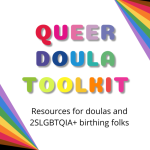
    The Queer Doula Toolkit

    This free download developed by Wellness Within and Nova Scotia Public Interest Research Group (NPIRG) is a must-have resource for birth workers supporting queer and trans clients. It is choc full of educational resources and fillable exercises. Some of these are on topics that are relevant to the 2SLGBTQ communities, like pronouns, queer families, and queer terminology. Others go over the usual perinatal health topic in a queer-trans-inclusive way. The toolkit is illustrated with vividly realized characters encompassing humans of all shapes, sizes, colours, gender presentations, abilities, and family structures.

    The fillable exercises include a queer-affirming and trauma-informed birth plan. The birth plan is supported by trauma-informed reflections that ask the client to reflect on their triggers and potential coping strategies. The strategies can be documented in the plan, including how their doula can help.


    Books & TV

    Why Did No One Tell Me This? The doulas’ honest guide for expectant parents.

    This book is a great resource for parents and birth workers. It’s not specifically queer, but it is written from an intersectional standpoint and uses inclusive language and imagery throughout. It’s a great option for parents looking to supplement their prenatal class or work with a doula and affirms a wide range of birthing people.


    What Makes a Baby?

    If the older sibling of a gayby (child of same-sex parents) wants to know where their new sibling came from, this is the book for them. Appropriate for early-years children, it answers the question “Where do babies come from?” in a way that is scientific and inclusive of the various ways in which queer and trans people family-build.


    Flamingo Rampant

    This independent children’s press has a beautiful and ever-growing selection of children’s books that celebrate the diversity of families and identities. Operating from an intersectional social justice lens, this publisher prioritizes stories about gender and sexually diverse children, youth, adults and families doing things that are bold, cool, adventurous and fun without making identity the focus of the story. Each book radiates a message of joy, acceptance, community, and love.




    Keira Grant (she/her) Inclusion and Engagement Lead – Racialized Communities

    Keira brings a wealth of experience to the Online Community Moderator role. She is a Queer, Black woman with a twenty-year track record in Equity, Diversity, and Inclusion (EDI) education, projects, and community building initiatives.[/vc_column_text][/vc_column][/vc_row]

  • Land Back, Bodies Back

    Land Back, Bodies Back

    [vc_row][vc_column][vc_column_text title=”Land Back, Bodies Back” css=”.vc_custom_1717529147132{margin-bottom: 0px !important;}”]Many settlers (i.e. all non-Indigenous residents on Indigenous land) are resistant to the Land Back Movement. Misinterpreting “Land Back” as a call for all settlers to “go back where they came from”, they often get scared, then angry.

    I am a Black settler on Turtle Island and I support the Land Back Movement. I certainly have no intention of “going back where I came from”. Aside from the fact that this would split up my interracial family, my ancestors hail from a Caribbean island wherein there are more of us in the diaspora than there are living on the island. If all of us who are now settlers elsewhere suddenly “returned” this would lead to social chaos and economic collapse.

    Land Back isn’t symbolic either. It is about restoring the stewardship of this land and its resources back to Indigenous people, ensuring they have self-determination. It’s about changing the narrative such that Indigenous ways of knowing and doing become the status quo.

    I am ride or die for a Turtle Island stewarded by Indigenous leaders. Climate change is heating up quite literally, with “wildfire season” starting earlier with bigger outbreaks each year. There is growing talk of returning to Indigenous “controlled burning” practices to mitigate the devastation. Indigenous communities were forced to abandon the practice because their colonizers thought controlled burns were “barbaric”. It’s one of countless examples of traditional resource stewardship practices that were abolished to the detriment of all.

    The Canadian state has a long history of interpreting its treaties with Indigenous nations in bad faith. Settler-colonists spuriously interpreted the land as meaning nothing more than the ground we are standing on. Where treaties have designated the land to specific nations, the state and its agents have still felt entitled to help themselves to the resources on that land, including plants, water, minerals, and animals.

    Indigenous nations have a more holistic understanding of the land. Everything the land produces is part of the land and the Indigenous elders representing their people signed the treaties with that pragmatic worldview. Seen in this way, our bodies and families are also part of the land. As such, reproductive and perinatal health and services are significant arenas for the Land Back movement.

    Indigenous midwives and doulas are at the forefront of actions to decolonize and reclaim birth. Here are a few examples of their initiatives that are bringing Indigenous birth back to the land:


    • Konwati’shatstenhsherawi’s means “Women are Giving Each Other Power” in the Mohawk language (Kanien’kéha). This collective trains Indigenous birth helpers to support birthing people using ancestral worldviews and practices. Since the grassroots program’s inception in 2017 demand has been high and the 4-person training team is busy teaching new cohorts all the time.


    • Call Auntie is an Indigenous-led sexual and reproductive healthcare clinic operating weekly at Toronto Birth Centre, and as a pop-up at other locations around the city. They offer a holistic suite of services rooted in traditional Indigenous knowledge, including mental health, primary care, and social support programs. Their service model emphasizes problem-solving, removing barriers, and community-led care.


    • Pauktuutit Inuit Women of Canada is making important strides forward in expanding access to traditional midwifery in remote northern communities. Their position is that this access is a health and cultural right for Inuit people. They recently published a report finding that governments do not provide adequate financial support to culturally safe sexual and reproductive health care. They advocate for an end to forced birth evacuation and a return to traditional birthing practices on the land.


    • Mālama Nā Pua o Haumea is a collective of Hawaiian traditional midwives who are working to reduce maternal mortality rates which are higher in Hawaii than in the continental US. Recently, legislation governing midwifery care has changed and they are now required to become certified nurse midwives (CNM) or certified professional midwives (CPM). Pale keiki (traditional Indigenous Hawaiian birth attendants) experience multiple institutional barriers to completing this certification, including cost and relocating to an urban centre. In contrast to these 4-year certification programs, pale keiki train with a mentor versed in intergenerational knowledge for over a decade. Some pale keiki are continuing to provide culturally safe care in Pidgin, despite these legislative changes. (US)


    • Kehewin Cree Nation has launched a program to train traditional midwives and has received federal funding to open a birth center on its territory. The nation aims to see more Cree babies born on their land and to honour sacred traditions such as placental ceremonies. Trainees in the program learn the knowledge of their midwife ancestors alongside Western medical knowledge. Four women are in the inaugural cohort and the program will take up to 4 years to complete. Kehewin Cree Nation anticipates these 4 trainees will be the first of many.


    Keira Grant (she/her) Inclusion and Engagement Lead – Racialized Communities

    Keira brings a wealth of experience to the Online Community Moderator role. She is a Queer, Black woman with a twenty-year track record in Equity, Diversity, and Inclusion (EDI) education, projects, and community building initiatives.[/vc_column_text][/vc_column][/vc_row]

  • Shining a Light on the Prevalence of Mental Illness

    Shining a Light on the Prevalence of Mental Illness

    [vc_row][vc_column][vc_column_text title=”Shining a Light on the Prevalence of Mental Illness” css=”.vc_custom_1715195210027{margin-bottom: 0px !important;}”]At a recent public gathering, I noticed that a speaker referred to a community member exhibiting symptoms of a mental illness as “a person with mental health”. I found the turn of phrase jarring, but couldn’t quite put my finger on why. May is Maternal Mental Health Month and it’s a good opportunity to do the important work of finger placing, that is learning from what that feeling of discomfort is trying to teach.

    Referring to mental illness as “mental health” is a confusing effort to euphemize states of mental ill-being. We use euphemisms for one reason: when the subject of conversation makes us profoundly uncomfortable. Clearly, being mentally ill is still taboo.

    By age 40, 50% of Canadians will have or will have had a mental illness. It’s important to acknowledge that it is an unwell state that can significantly alter a person’s life. We can be strengths-focused while being honest. People with a range of mental illnesses can be resilient, resourceful, and creative. Some of the disability experienced by people living with mental illness is socially constructed, such as rigid social, cultural, and economic expectations regarding the hours and structure of paid work.

    Truthfully, the acute phase of any mental illness does not feel good, and functioning to the best of what you know your ability to be, and meeting your priorities, becomes impossible. Most people would do just about anything to return to a mentally well state. Sometimes, desperation to return to a healthy state can be fatal, if people can’t see any path other than death to return to wellbeing.

    Being unable to say you feel awful without shame is part of the problem. Being able to say “I feel like crap right now and I can’t function at my best, or at all” is the first step on the path to wellness.

    As doulas, childbirth educators, and birth workers, we have a vital role to play in opening time and space for clients to say they feel ill. We can normalize not always feeling happy right after you have a baby. We can normalize feeling anxious rather than excited during pregnancy. We can normalize still being down months after you lost a pregnancy when everyone is saying “You can just try again.”

    Recognizing that your state of ill-being is normal makes it easier to face without fear. With fear removed, it becomes easier to see that this state is temporary and become motivated to explore avenues to becoming mentally healthy.

    This month we will spend time unmasking the mental illness behind Maternal Mental Health Month. It has a face, and it has a name. When we name mental illness, it’s like shining a light on the monster under the bed. We see that there’s not as much to fear as we thought and that we have more tools for safety at our disposal than we realized.


    For more information about Maternal Mental Health visit the World Maternal Health Day websitwmmhday.postpartum.net

    #MATERNALMHMATTERS

    Keira Grant (she/her) Inclusion and Engagement Lead – Racialized Communities

    Keira brings a wealth of experience to the Online Community Moderator role. She is a Queer, Black woman with a twenty-year track record in Equity, Diversity, and Inclusion (EDI) education, projects, and community building initiatives.[/vc_column_text][/vc_column][/vc_row][vc_row][vc_column][mk_header][/vc_column][/vc_row][vc_row][vc_column][vc_single_image image=”540566″ img_size=”full”][/vc_column][/vc_row]

  • The Importance of Being Seen: Trans Day of Visibility & Pink Shirt Day

    The Importance of Being Seen: Trans Day of Visibility & Pink Shirt Day

    [vc_row][vc_column][vc_column_text title=”The Importance of Being Seen: Trans Day of Visibility & Pink Shirt Day” css=”.vc_custom_1714091548194{margin-bottom: 0px !important;}”]


    When I was a kid, we were taught that not seeing differences, or being “colour-blind” was the right way to be “tolerant” and “accepting” of diversity. We hear echoes of this sentiment when we hear “They can do whatever they want behind closed doors, but why do they have to flaunt it in our faces?”

    March 31 was Trans Day of Visibility and April 10 was International Day of Pink. Both observances attest to the importance of being seen as an integral dimension of human rights and inclusion. People who can only be their authentic selves behind closed doors can’t hold their same-sex partner’s hand during the anatomy ultrasound, or tell their care team that they want to be called “Papa” after they give birth. People who are forced to hide their identity behind closed doors are at risk of getting beaten up in bathrooms and dying by suicide behind closed doors. Trans people need to be seen so that kids like Nex Bennedict can go to school safely. Behind closed doors is exactly where abuse and violence hide.

    Having safety to be seen means being able to fully participate in society. It boils down to countless everyday things that people take for granted when their identities are not contested. Being able to use public washrooms without risking confrontation or violence. Accessing information on reproductive health that normalizes your body and healthcare experiences. Not being asked to explain where your partner is at prenatal appointments when they are in the exam room with you. Being able to find pregnancy attire that aligns with your usual style.

    Trans and queer people need to call for visibility and wear pink to get noticed so that we can lead normal lives.

    As birth workers, here are some things we can do to help queer and trans folks feel seen in the reproductive and perinatal wellness sphere:

    • State explicitly in your promotional materials that you welcome and affirm queer and trans people
    • Use gender-neutral language in your promotional materials and handouts
    • Have open conversations with clients about their preferred pronouns and terms for their parenting roles and body parts.
    • Become familiar with resources in your community that support queer and trans families so you can make great referrals.
    • Educate yourself on health inequities faced by queer and trans birthers
    • Challenge queer and transphobia in yourself and others

    You can find out more about Trans VisibilityVisibilty Day here

    You can find out more about International Day of Pink here


    Keira Grant (she/her) Inclusion and Engagement Lead – Racialized Communities

    Keira brings a wealth of experience to the Online Community Moderator role. She is a Queer, Black woman with a twenty-year track record in Equity, Diversity, and Inclusion (EDI) education, projects, and community building initiatives.[/vc_column_text][/vc_column][/vc_row]

  • Respecting All Life: Reflections on International Holocaust Remembrance Day and National Day of Remembrance and Action Against Islamophobia

    Respecting All Life: Reflections on International Holocaust Remembrance Day and National Day of Remembrance and Action Against Islamophobia

    [vc_row][vc_column][vc_column_text css=”.vc_custom_1706563078413{margin-bottom: 0px !important;}”]That horrible day in 2017 when for no reason other than hate a 6 Muslim Canadians were killed at a Mosque in Quebec is still haunting. In a society that claims to love peace, equality, and freedom, the level of hate that spawned this horrific attack should never have been able to arise. What’s almost as haunting is that in the intervening 7 years, we’ve learned very little about the thinly veiled hate that is clearly pervasive in this country because we haven’t learned how to have an ongoing, brave discussion about it.

    This year, Holocaust Remembrance Day (Jan. 25) and National Day of Action Against Islamophobia fall as a very deadly conflict in Israel-Palestine has raged on for over 100 days. While Jewish and Muslim Canadians are no more complicit in the conflict than any other Canadians, they have been forced to endure an unprecedented increase in hate-motivated attacks against them. I wish I was more surprised.

    We’re too polite to talk about hate until people are getting killed, and by then it’s too late. We hold the guilty party accountable when the van attack and similar crimes happen, but we don’t hear the call to examine the society that created the van attack.

    As birthworkers, we see and snuggle many brand-new babies. Every single one is special and they all deserve to grow up and live the lives they create for themselves based on the values that were cultivated in childhood. The presence of hate in the world makes this right impossible to realize for all children, so hate must be eradicated.

    To our Israeli, Jewish, Muslim, and Palestinian alumni and audience, we know this has been an unbearably distressing last few months within your communities here in Canada and internationally. As birthworkers in your communities, you have had to process your own feelings while supporting birthers in your community who are under incredible strain. We know that extreme stress can contribute to complicated pregnancies and challenging outcomes. We see the vital work you are doing in your communities at this time and we are continuing to extend our compassion and support.

    As doulas, we will continue to shine a light on hate in the healthcare system, institutions, communities, and ourselves. Only when hate is diligently brought out into the open and swept away can we have communities where all life is truly respected and it is safe for all children to grow. 

    If you are looking for guidance on how you can support your community and access support for yourself at this difficult time, please visit our blog post “Our Hearts Are With You” from November 10, 2023. [/vc_column_text][/vc_column][/vc_row][vc_row][vc_column][vc_single_image image=”534490″][vc_column_text css=”.vc_custom_1706554746991{margin-bottom: 0px !important;}”]Keira Grant (she/her) Inclusion and Engagement Lead – Racialized Communities

    Keira brings a wealth of experience to the Online Community Moderator role. She is a Queer, Black woman with a twenty-year track record in Equity, Diversity, and Inclusion (EDI) education, projects, and community building initiatives.[/vc_column_text][/vc_column][/vc_row]

  • National Day of Remembrance & Action on Violence Against Women

    National Day of Remembrance & Action on Violence Against Women

    [vc_row][vc_column][vc_column_text css=”.vc_custom_1701888370897{margin-bottom: 0px !important;}”]National Day of Remembrance and Action on Violence Against Women (December 6) hits a bit different for me this year. On December 6, 1989, 14 young women were murdered at Polytechnique Montreal. The women were pursuing degrees in engineering. Their murderer felt that by entering into a male profession these women were usurping a place in society that rightfully belonged to him. He ordered their male peers from the room at gunpoint to make sure we knew this was about hating women.

    Earlier this year, doulas were targeted for gender-based violence because of their career choices. In this instance for choosing a feminized profession, the intimate and sexualized nature of which could be exploited by a fraudulent predator. As a result of the persistent efforts of the fraudster’s victims, she was arrested in March of this year and the situation did not escalate to worse violence. Still, I’m left with many questions about the climate of fear, suspicion, and infighting that existed within the doula community for months while police and other organizations that are supposed to protect the public did nothing to stop this person’s malicious, harmful behaviour. This despite so many incidents where woman-hating behaviour has escalated to femicide.

    In Sault Ste. Marie in October, a known perpetrator of intimate partner violence murdered 5 people, including 3 children, adding momentum to a national call for gender-based violence to be declared an epidemic. We at Doula Canada wholeheartedly support this call, and add our voices to it. As birth workers, we know that pregnancy and postpartum are vulnerable times. Existing IPV often worsens, and in many instances, this is when it starts.  

    Our own safety also matters in doing this work. We are often behind closed doors, in people’s homes, providing intimate care one-on-one. It’s not constructive to approach care work from a place of fear. Statistically, our clients are more likely to be victims of violence rather than perpetrators. However, one of the most disturbing things I learned from events earlier this year is that there is a casual normalization of sexual harassment in this field. Several people posted about having their time wasted by solicitation from fetishists posing as birth clients, as though this was simply par for the course. Privately, I’ve heard stories of doulas being sexually harassed by a client’s partner in the client’s home, and not knowing of any options for recourse. Earlier this year, when birth workers were being targeted, many birth workers focused on the perpetrator’s well-being rather than the well-being of a growing number of victims.

    The reason for this attitude is the same as the reason why some jurisdictions (such as the province of Ontario) have refused to declare GBV an epidemic. And it’s the same reason why opportunities to stop the perpetrator in the Sue before he killed were missed. GBV occurs in the context of normalized systemic misogyny. Even in a profession aimed at reducing reproductive violence for our clients, we’ve forgotten to expect more for ourselves.

    Alongside growing our conversation about GBV in relationships, we need to shine a light on occupational GBV. In other fields where home visits are carried out by a largely feminized workforce (e.g. nurses, social workers), trainees are given guidance on spotting red flags, mitigating risk, and acting to effect accountability. We’re going to start doing that here at Doula Canada. On Jan. 23 we will open this much-needed conversation by hosting a webinar on GBV in birthwork and how we can take charge of our community’s safety. We owe this to ourselves and each other. 

    Webinar Details Here: https://stefanie-techops.wisdmlabs.net/training/webinar-gender-based-violence-in-support-work/

    It is fitting that Women’s Remembrance Day falls within UN Women’s 16 Days of Activism Against Gender-Based Violence campaign. For ideas for actions you can take against GBV check on this resource on Canadian Women Foundation’s #ActTogether Campaign. https://canadianwomen.org/acttogether-campaign/

    *If you are unfamiliar with the events of earlier this year that I reference in this article, you can learn more about that here: https://www.cosmopolitan.com/lifestyle/a44866427/kaitlyn-braun-doula-pregnancy-accused-fraud-harassment/

    [/vc_column_text][/vc_column][/vc_row][vc_row][vc_column][vc_column_text css=”.vc_custom_1701888381111{margin-bottom: 0px !important;}”]Keira Grant (she/her) Inclusion and Engagement Lead – Racialized Communities

    Keira brings a wealth of experience to the Online Community Moderator role. She is a Queer, Black woman with a twenty-year track record in Equity, Diversity, and Inclusion (EDI) education, projects, and community building initiatives.[/vc_column_text][/vc_column][/vc_row]

  • 16 Days of Activism Against Gender-Based Violence

    16 Days of Activism Against Gender-Based Violence

    [vc_row][vc_column][vc_column_text css=”.vc_custom_1701109787897{margin-bottom: 0px !important;}”]For our observance of UN Women’s 16 Days of Activism Against Gender-Based Violence, we reflect on how doulas are involved in ending obstetric violence at the individual and systemic level. Reflecting on this year’s theme, we call on governments and insurance providers to Unite and Invest to Prevent Violence Against Women and Girls by funding better access to doula care.

    Where we need to go

    As doulas, companions, and birth keepers, we know in our bones that our presence alleviates the challenges of birth and new parenthood and supports people to have joyful, transformative experiences during this major life event. 

    A growing body of research supports our intuitive knowledge. Doula care is an effective perinatal intervention that reduces the need for medical interventions, including c-sections, decreases low birth weight and preterm births, and improves satisfaction with childbirth and postpartum well-being, among many other benefits. These benefits have the biggest impact on families adversely affected by the social determinants of health, including low-income, and racialized people (Cidro et al., 2023; Greiner et al., 2019; Kozhimannil et al., 2016; Marshall et al., 2022; Ramey-Collier et al., 2023; Robles, 2019; Thomas et al., 2023; Wodtke et al., 2022; Young, 2022).

    Yet, despite this, only 6% of birthing families receive support from a doula. Doulas are usually paid by families out of pocket, and care is not usually available to the populations for whom having a doula might have the greatest impact.

    Some exciting changes are happening in the United States. Starting from around 2020, several studies found that racialized birthers and newborns experienced much poorer outcomes than their white counterparts, including an increased likelihood of death. This disparity was most significant for black people. These studies opened a floodgate of conversation about a Black maternal health crisis in the US. State healthcare systems are under significant political pressure to find solutions. Doula care is seen as a critical intervention that improves outcomes for racialized birthers and babies, and many Medicaid-funded doula programs are emerging (Rochester, Delaware, Michigan).

    Sadly, Canada is lagging in finding innovative ways to make doula care accessible. One reason for this is that it is harder for researchers and advocates to demonstrate similar racial disparities because Canada does not collect race-based data. There is ample anecdotal evidence that Black and Indigenous people experience the same medical racism that has been identified in the US, but individual accounts can’t provide the level of “proof” that makes a strong case for funding.

    That being said, a recent study by obstetrician researchers at McMaster University learned that birthers in Canada experience a high rate of operative vaginal deliveries (forceps or vacuum) and has higher rates of 3rd and 4th-degree tears than any other high-income country (CTV, 2023). Continuous support from a doula during childbirth reduces the need for interventions like operative deliveries.

    Call to Action for International Day for the Elimination of Violence Against Women (November 25)

    Whether you are a birthworker, a birther, or a concerned citizen, you can add your voice to the call for better access to doula care by doing two things:

    1. Write or call your Member of Provincial Parliament (MPP) and let them know you want coordinated public funding for doula care in your province’s healthcare plan. 
    2. If you have extended health coverage, call your insurance carrier and let them know you would like doula care to be an insured healthcare expense. More insurance companies covering doula care would make this support accessible to many more families.

    Birthworker Affirmations for 16 Days

    We use affirmations to buoy our clients, but what about using them to protect ourselves from burnout as we extend compassion to clients and act for systemic change? As part of our observance of 16 Days of Action Against Gender-Based Violence, we offer these 16 affirmations to support you on your birth work journey.

    1. My work humanizing birth humanizes communities. The merits of this work are limitless.
    2. My practice of self-compassion is integral to my ability to extend compassion to my clients.
    3. Changing one life changes everyone’s life. By supporting each person I honour our interconnectedness.
    4. My actions can make a difference.
    5. I will manifest the village I need to support me to continue manifesting change for birthers and families.
    6. By facilitating a non-judgemental space, I play an invaluable role in creating a safe space.
    7. By creating a sacred space for birth, I bring great joy to families, which increases my own joy.
    8. When I remember to take a deep breath, my client is reminded to breathe deeply.
    9. With collaboration and determination, we can realize humanized, empowering birth for all families. 
    10. My acts of service provide a blanket and a shield to families at their most vulnerable.
    11. My compassionate presence and loving words are a powerful antidote to suffering that can exist within birth, making space for more joy.
    12. By inspiring birthers and families to believe that physiological birth is possible, I play a tangible role in making physiological birth attainable.
    13. I will preserve my energy for the real struggle. 
    14. It is a blessing to walk alongside families during this intimate and transformative time, for which I am deeply grateful.
    15. With deeply rooted compassion, I can be a willow or an oak in service to my clients’ needs.
    16. With the birthwork community’s diligence, one day all births will be humanized births. I am honoured to be a part of this movement.


    Keira Grant (she/her) Inclusion and Engagement Lead – Racialized Communities

    Keira brings a wealth of experience to the Online Community Moderator role. She is a Queer, Black woman with a twenty-year track record in Equity, Diversity, and Inclusion (EDI) education, projects, and community building initiatives.


    We invite you to practice with the ones that resonate with you. Please share any of your own affirmations that would support the birthwork community.[/vc_column_text][/vc_column][/vc_row]