Category: Community & Lifestyle

Insights on balance, gratitude, connection, and building supportive communities within birth work. Personal reflections, lifestyle shifts, and stories of resilience from the doula journey.

  • 16 Days of Activism Against Gender-Based Violence

    16 Days of Activism Against Gender-Based Violence

    [vc_row][vc_column][vc_column_text css=”.vc_custom_1701109787897{margin-bottom: 0px !important;}”]For our observance of UN Women’s 16 Days of Activism Against Gender-Based Violence, we reflect on how doulas are involved in ending obstetric violence at the individual and systemic level. Reflecting on this year’s theme, we call on governments and insurance providers to Unite and Invest to Prevent Violence Against Women and Girls by funding better access to doula care.

    Where we need to go

    As doulas, companions, and birth keepers, we know in our bones that our presence alleviates the challenges of birth and new parenthood and supports people to have joyful, transformative experiences during this major life event. 

    A growing body of research supports our intuitive knowledge. Doula care is an effective perinatal intervention that reduces the need for medical interventions, including c-sections, decreases low birth weight and preterm births, and improves satisfaction with childbirth and postpartum well-being, among many other benefits. These benefits have the biggest impact on families adversely affected by the social determinants of health, including low-income, and racialized people (Cidro et al., 2023; Greiner et al., 2019; Kozhimannil et al., 2016; Marshall et al., 2022; Ramey-Collier et al., 2023; Robles, 2019; Thomas et al., 2023; Wodtke et al., 2022; Young, 2022).

    Yet, despite this, only 6% of birthing families receive support from a doula. Doulas are usually paid by families out of pocket, and care is not usually available to the populations for whom having a doula might have the greatest impact.

    Some exciting changes are happening in the United States. Starting from around 2020, several studies found that racialized birthers and newborns experienced much poorer outcomes than their white counterparts, including an increased likelihood of death. This disparity was most significant for black people. These studies opened a floodgate of conversation about a Black maternal health crisis in the US. State healthcare systems are under significant political pressure to find solutions. Doula care is seen as a critical intervention that improves outcomes for racialized birthers and babies, and many Medicaid-funded doula programs are emerging (Rochester, Delaware, Michigan).

    Sadly, Canada is lagging in finding innovative ways to make doula care accessible. One reason for this is that it is harder for researchers and advocates to demonstrate similar racial disparities because Canada does not collect race-based data. There is ample anecdotal evidence that Black and Indigenous people experience the same medical racism that has been identified in the US, but individual accounts can’t provide the level of “proof” that makes a strong case for funding.

    That being said, a recent study by obstetrician researchers at McMaster University learned that birthers in Canada experience a high rate of operative vaginal deliveries (forceps or vacuum) and has higher rates of 3rd and 4th-degree tears than any other high-income country (CTV, 2023). Continuous support from a doula during childbirth reduces the need for interventions like operative deliveries.

    Call to Action for International Day for the Elimination of Violence Against Women (November 25)

    Whether you are a birthworker, a birther, or a concerned citizen, you can add your voice to the call for better access to doula care by doing two things:

    1. Write or call your Member of Provincial Parliament (MPP) and let them know you want coordinated public funding for doula care in your province’s healthcare plan. 
    2. If you have extended health coverage, call your insurance carrier and let them know you would like doula care to be an insured healthcare expense. More insurance companies covering doula care would make this support accessible to many more families.

    Birthworker Affirmations for 16 Days

    We use affirmations to buoy our clients, but what about using them to protect ourselves from burnout as we extend compassion to clients and act for systemic change? As part of our observance of 16 Days of Action Against Gender-Based Violence, we offer these 16 affirmations to support you on your birth work journey.

    1. My work humanizing birth humanizes communities. The merits of this work are limitless.
    2. My practice of self-compassion is integral to my ability to extend compassion to my clients.
    3. Changing one life changes everyone’s life. By supporting each person I honour our interconnectedness.
    4. My actions can make a difference.
    5. I will manifest the village I need to support me to continue manifesting change for birthers and families.
    6. By facilitating a non-judgemental space, I play an invaluable role in creating a safe space.
    7. By creating a sacred space for birth, I bring great joy to families, which increases my own joy.
    8. When I remember to take a deep breath, my client is reminded to breathe deeply.
    9. With collaboration and determination, we can realize humanized, empowering birth for all families. 
    10. My acts of service provide a blanket and a shield to families at their most vulnerable.
    11. My compassionate presence and loving words are a powerful antidote to suffering that can exist within birth, making space for more joy.
    12. By inspiring birthers and families to believe that physiological birth is possible, I play a tangible role in making physiological birth attainable.
    13. I will preserve my energy for the real struggle. 
    14. It is a blessing to walk alongside families during this intimate and transformative time, for which I am deeply grateful.
    15. With deeply rooted compassion, I can be a willow or an oak in service to my clients’ needs.
    16. With the birthwork community’s diligence, one day all births will be humanized births. I am honoured to be a part of this movement.


    Keira Grant (she/her) Inclusion and Engagement Lead – Racialized Communities

    Keira brings a wealth of experience to the Online Community Moderator role. She is a Queer, Black woman with a twenty-year track record in Equity, Diversity, and Inclusion (EDI) education, projects, and community building initiatives.


    We invite you to practice with the ones that resonate with you. Please share any of your own affirmations that would support the birthwork community.[/vc_column_text][/vc_column][/vc_row]
  • Trans Day of Remembrance

    Trans Day of Remembrance

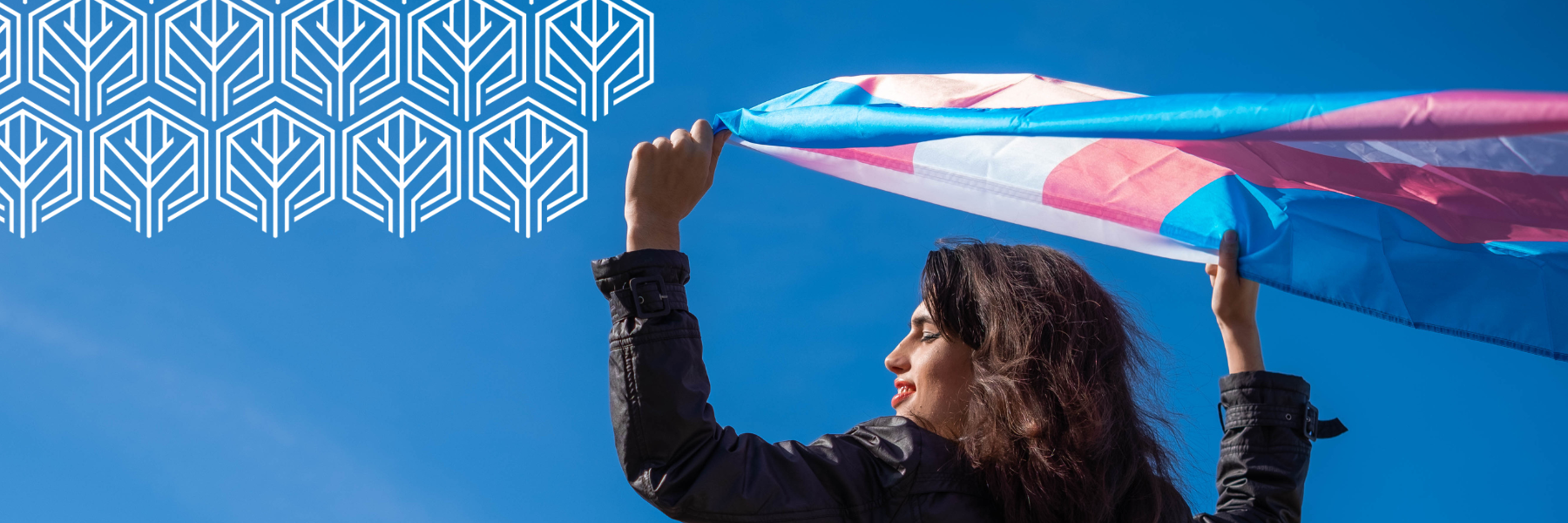
    [vc_row][vc_column][vc_column_text css=”.vc_custom_1700318432768{margin-bottom: 0px !important;}”]Trans people’s existence is not an ideology. Transness is a natural and inevitable aspect of the wondrous biological and social diversity of human beings. As humans engage in a debate about whether or not some humans get to use bathrooms, attend school safely, and read stories to children, much of the panic regarding “gender ideology” is fueled by myths and misinformation that appear to have taken off like the wildfires that plagued us this Spring and Summer. 

    Like wildfire, these myths are dangerous because they kill. Trans youth are at 7.9 times the risk of attempting suicide and 4 times more likely to be the victims of violent crime than their cis counterparts. Those who lose their lives to violence continue to be overwhelmingly trans, Black women. That’s why November 20 is Trans Day of Remembrance.

    Here are some of the most toxic myths fanning the flames of fear and hate, followed by the facts that can douse those flames.

    Myth 1: People come in two kinds, male and female. 

    Fact: There is ample scientific evidence that human biology is far more complex than inny equals girl, outie equals boy. 

    MRI-based studies show that the putamen (the region of the brain that controls cognitive functioning and other tasks) in trans people differs from structural norms that are consistent with their assigned gender and more closely resembles their felt gender. (Flint et. al. 2020; Clemens et. al. 2021)

    Epigenetics is the emerging science regarding how different genes in our biological makeup get switched on and manifest. This epigenetic study found that since all human embryos start with the potential to be male or female, hormonal variation during sex differentiation can cause genetic changes that cause a person’s gender to be different from their sex.   

    I’m a science junkie and I could go on with articles about hormone receptor mutations and genetic perspectives. But I think you get the idea that the biology of transness is a lot more complicated than the primer we got in grade school.

    Myth 2: People who think their gender is different from their biological sex are mentally ill.

    Fact: Well, technically being trans is a mental illness. The 5th edition of the Diagnostics and Statistics Manual (DSM-V), a compendium that provides diagnostic criteria for all mental illnesses, refers to transness as “gender dysphoria”. There is consensus among the mental health professionals that write the DSM that the appropriate treatment is supporting the person to live as their felt gender. Receiving a diagnosis and treatment for gender dysphoria is an involved process. It takes years to be approved for interventions like surgery. People under the age of 16 cannot receive permanent interventions like surgery. As the emerging biological science suggests, the classification of “gender dsyphoria” as a mental illness is controversial in trans communities. For now, people have to meet the diagnostic criteria in the DSM-V to receiving gender-affirming healthcare.

    Myth 3: Trans people are emerging because of the new “gender ideology”.

    Fact: While some of the terminology being used is relatively new, people whose gender experience differs from biological “norms” have always existed. Research shows that over 150 Indigenous nations on Turtle Island recognized a third gender before colonization. Indigenous communities were by no means unique. For example, hijras in South Asia have been recognized as a gender group dating back to the 1200s. Similarly, in pre-colonial Uganda, there was the mudoko dako.

    Myth 4: Talking about trans people in schools “sexualizes children” and “grooms them” into becoming trans.

    Fact: As the facts above demonstrate, trans people have always been here. People are born trans as a result of complex biological factors. The kind of experience they have is determined by society’s attitude toward them. In the pre-colonial societies I mentioned above, trans people were honored and respected members of their communities leading secure and productive lives. Talking about trans people will not make more of them magically appear. Explaining sexual and gender diversity to kids is no more inherently sexual than explaining heterosexual marriage. Failing to talk about LGBTQ+ people won’t make them go away. However, silence will make people more unsafe.

    It’s fitting that November 20 is also National Child Day. The goal of the day is to open dialogue about the vulnerability of children and what we can do collectively to keep them safe and honour their rights. Telling kids the truth is how we can keep them safe. Treating all people with dignity and respect is how we create environments where kids feel safe to be themselves. Arming kids with the language to talk about their bodies and experiences is how we keep them safe from actual groomers. Building up their confidence and self-respect is how we keep trans kids alive and well.


    Keira Grant (she/her) Inclusion and Engagement Lead – Racialized Communities

    Keira brings a wealth of experience to the Online Community Moderator role. She is a Queer, Black woman with a twenty-year track record in Equity, Diversity, and Inclusion (EDI) education, projects, and community building initiatives.

    [/vc_column_text][/vc_column][/vc_row]
  • Domestic Violence Awareness Month

    Domestic Violence Awareness Month

    [vc_row][vc_column][vc_column_text css=”.vc_custom_1698759996931{margin-bottom: 0px !important;}”]Let Clients Know You are a Safe Person to Disclose to about Intimate Partner Violence

    For one-quarter of women who experience DFV [Domestic and family violence], the violence begins during pregnancy. Where violence was previously occurring, it escalates in frequency and severity during pregnancy and early motherhood.” (Baird et. al., 2021)

    Based on this disturbing truth, Baird and many other researchers recommend that all pregnant women be screened for intimate partner and domestic violence. There is a fair amount of controversy and debate within international healthcare systems and among individual providers regarding whether or not to implement this recommendation. 

    Unfortunately, vulnerable pregnant people and children are caught in the middle of that debate. In Sault. Ste. Marie on Oct 24, 2023, 5 people including 3 children were killed due to domestic violence, renewing calls for intimate partner violence to be declared an epidemic.

    We can avoid getting bogged down by debate and discomfort and put the well-being of birthers and families first by being a safe zone for clients to disclose IPV and other trauma. Here are some strategies I’ve used universally to let clients know they can tell me about domestic abuse. I can’t go into details for obvious reasons, but suffice it to say, these strategies work.

    I’d love to hear from you in the comments about what you’re doing to support clients to open up about abuse and violence.

    Create a Cone of Silence

    When couples retain my services, my welcome email explains how each individual can communicate with me confidentially. The email is clearly a template, so it’s obvious that I’m not putting that out there for personal reasons. 

    Then I initiate a chat with the birther via a communication channel that is obviously exclusive to them and me, usually a chat with a cell phone number that I know is theirs. This strategy isn’t perfect since many abusive partners closely monitor the victim’s communication channels. Still, including this in the welcome email normalizes situations where information should not be shared between partners.

    Ask Everyone About Stressors

    I ask clients to complete my intake questionnaire individually rather than as a team. The questionnaire invites the client to share about stressors in their home environment. I’m aware that not everyone might answer a question as blunt as “Are you being abused by your partner?” candidly, especially with someone they are still getting to know. Additionally, abuse can take many shapes and often goes unrecognized. Clients disclose a range of domestic issues in response to this question. Even if nothing is shared at that time, it sends a clear message that I am open to talking about practical, social, and emotional aspects of their pregnancy journey.

    Leverage One-on-One Moments

    Some things come out much more easily face-to-face than they do in other ways. Unfortunately, our work prenatally and postpartum often occurs while both members of a couple are present. I take advantage of times when the birther and I happen to be one-on-one to initiate conversations about the birth and postpartum life. I let all of my birthers know that while I’m here to support them as a team, the buck stops with them. If I have to make a choice, I’m ride or die for the birther. 

    Have Resources at the Ready if Someone Discloses Abuse 

    However the birther decides to handle the situation, I make sure I know about local resources that can support them in that choice. This encompasses therapists, organizations that support women to develop safety and escape plans, community legal clinics, and food security resources. 


    For folks in Ontario, contacting the Assaulted Women’s Help Line is a great way to start figuring out your options to address intimate partner violence. 1.866.863.0511

    [/vc_column_text][/vc_column][/vc_row][vc_row][vc_column][vc_column_text css=”.vc_custom_1698759879666{margin-bottom: 0px !important;}”]Keira Grant (she/her) Inclusion and Engagement Lead – Racialized Communities

    Keira brings a wealth of experience to the Online Community Moderator role. She is a Queer, Black woman with a twenty-year track record in Equity, Diversity, and Inclusion (EDI) education, projects, and community building initiatives.[/vc_column_text][/vc_column][/vc_row][vc_row][vc_column][vc_single_image image=”520952″][/vc_column][/vc_row]

  • International Day for the Eradication of Poverty

    International Day for the Eradication of Poverty

    [vc_row][vc_column][vc_column_text css=”.vc_custom_1698093869318{margin-bottom: 0px !important;}”]The rising cost of food and collective grocery store anxiety rest on a bed of other precarious conditions. The price of everything has gone up. We are still seeing empty shelves in stores “post” pandemic as we head to the mall in shorts on a 33-degree October day. There are numerous causes for feeling uncertainty.

    When society gets taken for a ride, children come right along with us. As someone who works with babies and families, on International Day for the Eradication of Poverty I’m reflecting on the fact that 50% of the world’s children are affected by poverty

    Most of these children are not where I am sitting, in a high-cost-of-living, high-standard-of-living urban centre in Canada. However, people where I am are still afraid of not having enough, and it’s making many people afraid to start a family.

    These fears are justified. Raising children is expensive, and we are facing a food crisis, a housing crisis, a climate crisis, and a healthcare crisis. People and families live in a lot of isolation which makes feeling secure challenging. Poverty has a significantly adverse impact on outcomes during pregnancy and childbirth, and on how all aspects of your life go from there.

    Support from a doula reduces the risk of many of the adverse outcomes that poverty increases the risk of. Sadly, individuals who can benefit the most from improved outcomes are those who are least able to pay the cost of hiring a doula. 

    Doulas and birth workers are a compassionate bunch. No one in this profession is here to get rich, and we want to provide our services to people who can benefit from them the most. However, we also have ourselves and our families to care for, and doing this work well takes time. Far too many kind-hearted people who have trained long and hard and love this work leave after a few years, turning to less rewarding work that pays the bills. When this happens, the doula’s skills go to waste and their community loses out on the transformative care they could have received.

    Advocates within the doula sphere are exploring options to improve community access to doula support while making a long-term career in this field more sustainable. At Doula Canada, we are doing our part by developing a briefing note that will elucidate opportunities and challenges in the current perinatal care landscape, the potential for doulas and childbirth educators to leverage these opportunities and solve these challenges, and models whereby doula care could be cost-effectively funded by a mix of social partners including different levels of government, insurance companies, and foundations. This initiative is directed by the Advocacy Working Group, comprised of Doula Canada members and staff. The Advocacy Working Group is part of our commitment to manifest a culture of equity, diversity, and inclusion (EDI) action within our school. Stay tuned for more on the Doula Access Initiative in the coming months.

    To connect with the Advocacy Working Group at Doula Canada, email Keira Grant, EDI Co-Lead at keira@stefanie-techops.wisdmlabs.net.


    Keira Grant (she/her) Inclusion and Engagement Lead – Racialized Communities

    Keira brings a wealth of experience to the Online Community Moderator role. She is a Queer, Black woman with a twenty-year track record in Equity, Diversity, and Inclusion (EDI) education, projects, and community building initiatives.

     [/vc_column_text][/vc_column][/vc_row]

  • World Food Day

    World Food Day

    [vc_row][vc_column][vc_column_text css=”.vc_custom_1697463575735{margin-bottom: 0px !important;}”]World Food Day hits a little differently this year. The skyrocketing cost of food has driven the federal government to summon the CEOs of Canada’s largest food retailers to a meeting in Ottawa on Thanksgiving Monday.

    Access to food is not just about the rising price of groceries in contrast to incomes that haven’t changed much. This year’s theme for World Food Day is Water is Life. Water is Food. Leave No One Behind. It calls us to reflect on access to food on a deeper level. The Food and Agriculture Organization of the United States notes that 71% of the planet is water, however only 2.5% of that water is fresh, drinkable water.

    Canadians are blessed to live in a freshwater-rich country, however, 28 Indigenous Reservations across the country are still living with long-term boil water advisories. These communities have been systemically left behind, demonstrating that social policies and political will are central dimensions of ending hunger.

    The statement “Water is Food” has an additional layer of meaning for birth workers. Water is the main ingredient in human milk, the ideal first food for all of us. When lactating parents don’t have access to clean drinking water babies are also left behind. When we view food and water as commodities we create a precarious circumstance for society’s most vulnerable members. 

    As victims of the Nestle infant formula scandal learned in the most horrific way possible, diluting formula with contaminated water can mean death for babies. In addition to the health risks associated with formula feeding, the cost of infant formula has risen along with all other goods. This follows on the heels of a formula shortage that saw the price for one canister exceeding $70 in the Territories in 2022 according to one of our members

    When we encourage and champion new parents to normalize, initiate, and sustain lactation and direct breast/chestfeeding we are engaging in a vital action to ensure food security in our communities. When we connect lactation support to action to achieve clean drinking water, and sustainable food networks for all, we are recognizing the intrinsic interconnectedness of social systems and family well-being.

    You can learn more about the struggle to secure clean drinking water for all First Nations in Canada at First Nations Drinking Water Settlement. To learn more about how you can support Indigenous land and water defenders in Canada visit Indigenous Climate Action.


    Keira Grant (she/her) Inclusion and Engagement Lead – Racialized Communities

    Keira brings a wealth of experience to the Online Community Moderator role. She is a Queer, Black woman with a twenty-year track record in Equity, Diversity, and Inclusion (EDI) education, projects, and community building initiatives.[/vc_column_text][/vc_column][/vc_row]

  • Bisexual Visibility Day

    Bisexual Visibility Day

    [vc_row][vc_column][vc_column_text css=”.vc_custom_1695560834217{margin-bottom: 0px !important;}”]According to national data, bisexuals make up the lion’s share of the LGB population. Yet, we are also the most invisible. This is because sexual orientation is usually interpreted based on relationship status and household composition, rather than on how an individual experiences their sexuality.

    My wife and I have been together for 16 years, and co-parenting together for 11 years. We are both bisexual. Rarely is our family interpreted accurately by the outside world. I am Black, she is white, our kid is mixed race and presents as Black. We are also both femmes. As a result of these factors, we have been in countless interactions where my wife has been interpreted, and treated as “my friend who helps me out with my kid”. She has actually been a part of every moment of his life since he was an ultrasound image.

    If she takes him to medical appointments she is asked to substantiate who she is in relation to him, or now that he is older, he has been asked to confirm her identity. This doesn’t happen when I take him to medical appointments. It is a good practice to confirm the relationship between adults and children at medical appointments. However, this seems to be happening based on race, sexual orientation, and gender-based assumptions about families, rather than as a universal safety precaution.

    We’ve come a long way in terms of normalizing same-sex households, but as recently as this past school year, our kid came home with a form that had spots for “mother” and “father”. It is so easy to create a form that has two spaces for “parent/guardian”. Outdated forms such as this one exclude a lot of families that aren’t “same-sex households”. 

    In general, we’re not very surprised by these microaggressions as we navigate a heterosexist world. What often lands more painfully are the microaggressions from within the LGBTQ community in relation to our bisexuality.

    Recently, we were at a comedy night that was heavily attended by queer and trans people. Despite the largely queer crowd, one of the comedians made a biphobic joke. We groaned and gave each other knowing eye-rolls. This reaction sparked a conversation with a lesbian couple that was seated at the same table. We got to chatting with them and when we revealed that we have been together for the better part of 2 decades and are raising a child together, they made a remark that we have heard in lesbian spaces before: “Oh, well it’s like you’re lesbians then”. 

    Like many microaggressions, the intention was clearly complimentary, but that’s definitely not how it landed. We are proud bisexual women. Our relationship with each other doesn’t change that. In these conversations, we find ourselves resisting the temptation to disclose being polyamorous and our relationships with men as a counterargument. No one should have to justify being Bi. That is just what some people are. We all understand that a person who’s been celibate for an extended amount of time isn’t necessarily asexual. It’s the same thing really. My sexual orientation is the one I was born with. Relationships are choices I make over time.

    Not all same-sex couples are gay and lesbian. Not all different-sex couples are straight. Many of us raise children using a variety of family and community structures. Being told we are not real or that our identity is a phase hurts. 

    A great way to make the world less painful for bisexuals and their families is to normalize and represent different family structures. Right now, there is a culture war over when it’s okay to start talking to kids about LGBTQ+ people. 

    Who among us can remember receiving an explanation about marriage and families? We take for granted that there is no need to explain these concepts. We learn about these and other institutions by observing the world around us. LGBTQ+ people are part of the world. Representing queer and trans folk in a child’s world from day one is how we present an accurate portrait of reality.

    There is content that affirms family diversity for all ages. Independent children’s publisher Flamingo Rampant offers an excellent selection of children’s books that show race, sexual, bodily, ability, and gender diversity with people and families doing all sorts of fun and magical things. Super Power Baby Shower by Toby Hill-Meyer and Fay Onyx tells the story of a queer, polyamorous family of superheroes preparing to have a baby! 

     Keira Grant (she/her) brings a wealth of experience to her EDI Co-Lead role. She is a Queer, Black woman with a twenty-year track record in Equity, Diversity, and Inclusion (EDI) education, projects, and community-building initiatives. As a mom and partner, she uses her lived experience to provide support and reflection for her clients and her work. Keira is the owner of Awakened Changes Perinatal Doula Services.

    [/vc_column_text][/vc_column][/vc_row]

  • World Suicide Prevention Day: Creating Hope Through Action

    World Suicide Prevention Day: Creating Hope Through Action

    [vc_row][vc_column][vc_column_text css=”.vc_custom_1693608059856{margin-bottom: 0px !important;}”]This year’s theme for World Suicide Prevention Day is creating hope through action. 

    There is a lot we can do intentionally to decrease suicidality and enhance hope among the perinatal population. 

    According to this data analysis in Canadian Medical Association Journal, one in every 19 perinatal deaths is due to suicide, making suicide a leading cause of perinatal death. CMAJ notes that these findings speak to a need for stronger mental health support during and after pregnancy. Discussing perinatal health universally during prenatal support is a good starting point. Knowing what to watch out for, and raising awareness and discussion about is also essential. 

    This 2022 article by Ann-Marie Bright and colleagues presents a scoping review of almost 20 years of literature on perinatal suicidality. Their central finding is that “The minimization of women’s experiences may lead to detrimental consequences and there is a need for increased knowledge of mental health problems by those working with women in the perinatal period to ensure safety planning conversations occur with every woman meeting ‘at risk’ criteria.”

    Suicidal ideation is having thoughts of committing suicide. These thoughts occur on a spectrum ranging in frequency, intensity, and intentionality. While suicidal ideation does not always lead to a suicide attempt, suicide attempts and completed suicides are always preceded by suicidal ideation. Early identification and intervention regarding suicidal ideation as an important way of preventing suicide. 

    Bright et. al divide the risk factors for suicidal ideation during the perinatal period into 3 categories:

    1. Biological, which includes:
      1. Nicotine and alcohol use
      2. Poor or low sleep
      3. Chronic illness
      4. Pregnancy conditions
      5. Complicated Birth
    2. Psychological, which includes 
      1. Trauma history
      2. Prior history of mental illness
      3. Pregnancy and infant loss
      4. Suicide attempt history
      5. Feeling unprepared to parent
    3. Social, which includes
      1. Unemployed/low income
      2. Inadequate support system
      3. Intimate partner violence
      4. Refugee Status
      5. Unhealthy relationships


    There are two key takeaways for doulas in these findings. Firstly, this is a pretty lengthy list of risk factors and it’s not exhaustive. Suicidal ideation could affect anyone, from any walk of life. We need to talk to all clients about mental health and raise awareness regarding red flags for mental ill health, and share local treatment options.

    Secondly, some people are more likely to be at risk than others. People who are marginalized and who have survived abuse and violence may need some extra helping hands. 

    As birth workers, our role is in and of itself a powerful action against suicide. Support from a doula has been shown to significantly reduce postpartum depression and strengthen new parent relationships. Perhaps this is because having a doula can mitigate many of these risks identified by Bright et. al, such as complicated birth, feeling unprepared to parent, and an inadequate support system. We can’t underestimate the life-saving power and potential of this work. We need financial and infrastructural support to do this work and connect with the clients who need us the most. 

    To learn more about how you can support suicide awareness and prevention in your birthwork practice, check out resources at Canadian Association for Suicide Prevention. 

    This short video also provides excellent information on warning signs for postpartum depression. https://youtu.be/6kaCdrvNGZw?si=nBqLwhMLnFd–XK3


    Keira Grant (she/her) brings a wealth of experience to her EDI Co-Lead role. She is a Queer, Black woman with a twenty-year track record in Equity, Diversity, and Inclusion (EDI) education, projects, and community-building initiatives. As a mom and partner, she uses her lived experience to provide support and reflection for her clients and her work. Keira is the owner of Awakened Changes Perinatal Doula Services.

    People exhibiting symptoms of perinatal mental illness should be encouraged to seek medical attention immediately.[/vc_column_text][/vc_column][/vc_row]

  • Fetal Alcohol Spectrum Disorder Day

    Fetal Alcohol Spectrum Disorder Day

    [vc_row][vc_column][vc_column_text css=”.vc_custom_1693401592473{margin-bottom: 0px !important;}”]Fetal Alcohol Spectrum Disorders (FASDs) are as prevalent as Autism Spectrum Disorders, but they are less talked about and wildly misunderstood. If you work with babies, you are likely to encounter one with FASD, but it often goes unrecognized and untreated. We’re going to do some myth-busting and share some facts that all birth workers should know and be prepared to share with clients.

    • Alcohol is a known teratogen (birth defect-causing agent). There is no known amount of prenatal alcohol exposure (PAE) or time during pregnancy when alcohol can be consumed without risk to the fetus.
    • 45% of pregnancies are accidental. Often, prenatal alcohol exposure occurs before pregnancy is detected. Early detection of pregnancy reduces the likelihood of PAE.
    • Not all PAE causes FASD to develop. The development of FASD is influenced by the amount of alcohol exposure and a mix of genetic and epigenetic factors. FASD affects people from all walks of life, races, and ethnicities
    • Social determinants of health influence the development of and treatment of FASD. For example, people who have had limited access to education, are less likely to be aware that consuming alcohol can harm their babies. People experiencing poverty and racism are less likely to disclose their alcohol consumption and seek timely treatment for themselves and their children due to fear of incarceration and having their children removed. 
    • While FASD is diagnosed based on the presence of specific facial characteristics, FASD can manifest in a variety of ways, with a range of symptom severity. Treatment needs to be tailored to the individual.
    • Newborns with FASD are often have heightened sensitivity to light and other environmental stimuli. They benefit from being cared for in a dark, quiet environment, and may need more soothing than other babies.
    • Many children with FASD struggle more with emotional regulation than other children. They can benefit from an established routine and early and active guidance on emotional regulation strategies such as breathing exercises. 
    • People with FASD often have specific strengths. For example, many people with FASD are highly self-aware, hopeful, collaborative, loving, and kind. Treatment that focuses on strengths rather than deficits is more effective.
    • Many people with FASD lead happy, fulfilling, and rewarding lives. This outcome is more likely with early, strengths-focused treatment. 

    In recognition that we need to talk about FASD, the Canadian Government declared September FASD awareness month in 2020. The theme for 2023 is Uniting our Strengths: Finding Solutions Together.

    As birthworkers, we can be part of the solution by informing ourselves of and celebrating the strengths of people with FASD. We can also hold non-judgmental, compassionate space for our clients to talk about drinking. Stigma is the leading reason why people don’t ask for help. 

    You can also honour the achievements of people with FASD by wearing red shoes this month! “Red Shoes Rock” is a grassroots movement that started in 2013 with FASD educator and advocate RJ Formanek wore shoes on an international stage. 

    In his own words: “Red shoes were critical to my narrative, they were the key to it all. They were all about being different… They spoke of speed, of freedom of thought and being different, and red running shoes with the power suit sent a message out there to the world.”

    For more information on supporting families navigating FASD, check out our posts from 2021 and 2022.


    Keira Grant (she/her) brings a wealth of experience to her EDI Co-Lead role. She is a Queer, Black woman with a twenty-year track record in Equity, Diversity, and Inclusion (EDI) education, projects, and community building initiatives. As a mom and partner she uses her lived expereince to provide support and reflection for her clients and her work. Keira is the owner of Awakened Changes Perinatal Doula Services.

    [/vc_column_text][/vc_column][/vc_row]
  • World Sexual Health Day

    World Sexual Health Day

    [vc_row][vc_column][vc_column_text css=”.vc_custom_1693400263770{margin-bottom: 0px !important;}”]Sexual health across the lifespan is much more complicated than what we learned in high-school sex ed, assuming our parents didn’t opt us out. The sex ed I received was exclusively focused on preventing pregnancy and disease. While these topics are vital, this narrow focus left me and many others ill-equipped to understand and navigate consent and fairness in intimate relationships, ensuring my own pleasure, trying to conceive, medicalized childbirth, and the changes of perimenopause. The education system left my generation to fend for itself regarding these everyday human needs.

    This is a huge part of why I’m so passionate about the work that doulas, perinatal educators, and birthworkers do to promote population and individual sexual health. I love being able to sit with clients for an hour or two and talk about all of the things we don’t usually talk about. This includes talks about the strain that timed intercourse can put on couples trying to conceive. Or the impact that a complicated pregnancy has on a couple’s sex life. It can look like strategizing on options to space out pregnancies post-c-section. It’s as holistic and infinite as people’s lives are.

    This year’s theme for World Sexual Health Day is consent. While the obvious implication is about consent to sexual activity, there’s an important connection to make with informed consent in medical decision-making. Women, female-assigned, and gender non-conforming people are at risk of sexual violence for the same reason that we are at risk of obstetric violence. In the context of a patriarchal, misogynistic society, our bodies are devalued and objectified. Society sends us the message that our bodies are not truly our own constantly. We are usually depicted as objects of sexual desire as baby-making vessels. This dehumanization of our bodies plays out on the street, in relationships, and in health care.

    By supporting birthers to think critically about bodily autonomy in medical decision-making, and to honour their bodies by requiring informed consent, we support birthers to think critically about why they are at risk of losing bodily autonomy in all aspects of their lives, and we teach them to expect and demand more.

    There is no sexual health without reproductive justice. The reproductive justice framework advanced by African-American women envisions a world where everyone can make reproductive choices, including the right to have and not have children, as facilitated by unfettered access to reproductive health care and social services. Informed consent is the foundation on which choice rests.

    It’s also Labour Day, making this a great opportunity to express gratitude for all the hard and life-changing work that you are doing to promote health, choice, well-being, and change in your communities. We will continue to advocate for improved access to doula support and income security for birth and reproductive justice professionals. A labour of love is still labour. Clients deserve access based on need and we deserve to be able to make a living doing this community-building work.


    Keira Grant (she/her) brings a wealth of experience to her EDI Co-Lead role. She is a Queer, Black woman with a twenty-year track record in Equity, Diversity, and Inclusion (EDI) education, projects, and community building initiatives. As a mom and partner she uses her lived expereince to provide support and reflection for her clients and her work. Keira is the owner of Awakened Changes Perinatal Doula Services.[/vc_column_text][/vc_column][/vc_row]
  • Connecting Communities through Food and Milk sharing

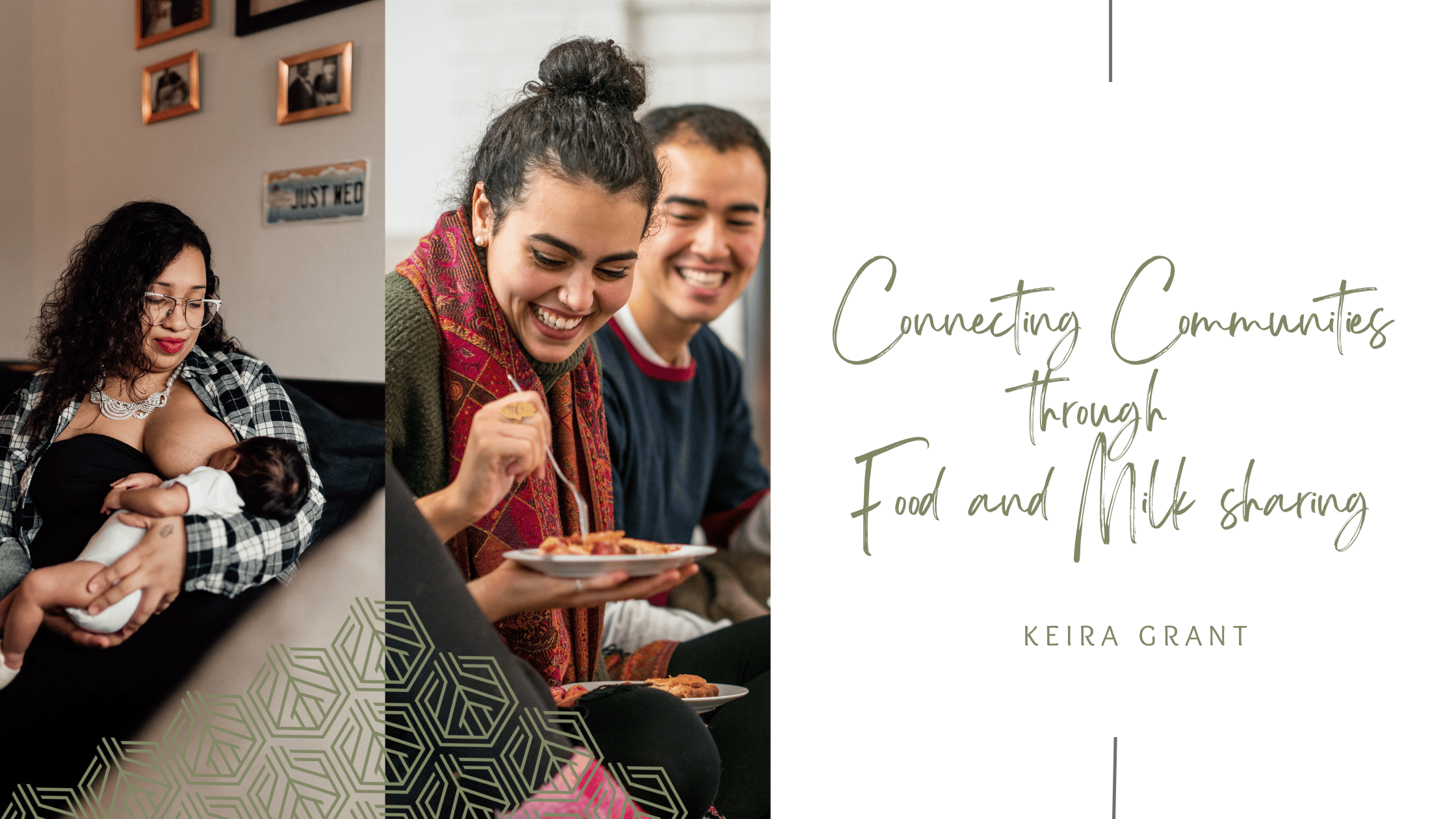
    Connecting Communities through Food and Milk sharing

    [vc_row][vc_column][mk_padding_divider][/vc_column][/vc_row][vc_row][vc_column][vc_column_text css=”.vc_custom_1692713941286{margin-bottom: 0px !important;}”]Food connects people, and can significantly impact the physical, social and emotional development of young children, families,  and carers.

    Dropping off a meal of nourishing food that gets the juices flowing is a time-honoured tradition of postpartum community care across the world. My queer, BIPOC community here in Toronto created a meal train for our household for the weeks after our son was born. This community care was invaluable for keeping me well-nourished and rested as I adjusted to the demands of breastfeeding a newborn and recovered. However, this seems to have become less and less common in a society that is individualist and concerned with keeping up appearances. In postpartum, birthers experience major changes in their lives; they are forced to deal with new internal and external demands for attention and care for themselves and the baby, leaving them less likely to feed themselves nourishing foods. A nursing parent generally needs more calories to meet their nutritional needs while feeding. An additional 330 to 400 kilocalories (kcal) per day is recommended for well-nourished lactating parents.

    We also need to talk about how hard it is for families to stay fed right now. As we head into Black Lactation Week it is important to acknowledge that Black families are more likely to live in food deserts and face economic disparities that make poor nutrition more likely. We are all dealing with jaw-dropping prices at the grocery store.

    With the pressures of significant life changes and the demands of lactation, we need to make things easier for new parents.

    At postpartum visits, I often find myself advising clients to watch their babies, not the clock. I have seen more than one baby in danger of being underfed because tired, overwhelmed new parents have been told that newborns need to eat every two to three hours. Sadly, sometimes this mathematical advice mixes with our cultural obsession with thinness and leaves some parents concerned that listening to their baby’s hunger cues will lead to obesity.

    I explain that babies do not know how we keep track of time, nor what books and doctors have said about them. But they are tiny experts about what they need to survive. By responding to the needs they convey we support secure attachment and healthy eating habits. We spend some time watching the baby together as I explain what the baby is telling us with their looks, faces, and body language.

    In addition to accurate, constructive information, parents need choices and resources to make long-term human milk feeding possible. I encourage expectant parents to make a postpartum plan in addition to their birth plan. During postpartum planning, we talk about how the baby AND the parents are going to stay fed.[/vc_column_text][/vc_column][/vc_row][vc_row][vc_column][mk_padding_divider][/vc_column][/vc_row][vc_row][vc_column][vc_single_image image=”513402″ img_size=”full” alignment=”center”][/vc_column][/vc_row][vc_row][vc_column][mk_padding_divider][/vc_column][/vc_row][vc_row][vc_column][vc_column_text css=”.vc_custom_1692716281700{margin-bottom: 0px !important;}”]In addition to accurate, constructive information, parents need choices and resources to make long-term human milk feeding possible. I encourage expectant parents to make a postpartum plan in addition to their birth plan. During postpartum planning, we talk about how the baby AND the parents are going to stay fed.

    It is also far too hard and stigmatized to access donated human milk when parents are not able to meet their child’s human milk needs on their own. Last year, a social media influencer went viral for nursing a friend’s baby. She had a baby around the same age and while caring for both kids, naturally put her close friend’s baby to the breast. The comment section exploded with people who found this caring act shocking and disgusting.

    We have truly gotten quite confused about priorities in communities when feeding a hungry human baby human milk is seen as abnormal. Communities of women and birthers have always raised children collectively, including sharing food and the work of feeding. Colonialism and its legacy have distorted this practice by creating a reality for several centuries wherein affluent white people had the power to force Black people to feed their babies because they were above doing it themselves. By normalizing sharing our milk by choice we take an important step toward healing this intergenerational trauma.

    We have created two downloadable resources to support sharing the care work of feeding in our communities. 

    • We offer the Lactation Recipe Box with a selection of six, nutritious recipes including ingredients that gently promote milk production
    • We also offer this infographic on milk sharing which provides an overview of the benefits and risks of milk sharing, with tips on how to do it safely.

    We hope these resources are of benefit to birthers and babies in your communities![/vc_column_text][/vc_column][/vc_row][vc_row][vc_column][mk_padding_divider][/vc_column][/vc_row][vc_row][vc_column][vc_column_text css=”.vc_custom_1692715580031{margin-bottom: 0px !important;}”]

    Keira Grant (she/her) brings a wealth of experience to her EDI Co-Lead role. She is a Queer, Black woman with a twenty-year track record in Equity, Diversity, and Inclusion (EDI) education, projects, and community-building initiatives. As a mom and partner, she uses her lived experience to provide support and reflection for her clients and her work. Keira is the owner of Awakened Changes Perinatal Doula Services.[/vc_column_text][/vc_column][/vc_row]